
Product
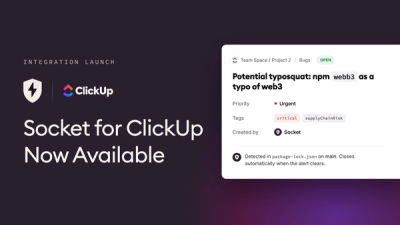
Socket for ClickUp Is Now Available
Create ClickUp tasks from Socket alerts, automate ticketing with custom rules, and keep alert and task status synchronized.
By Jeppe Hasseriis - Aug 26, 2026
@web-portfolio/icons-sanity
Advanced tools
Sanity Studio icon picker input, backed by the same bundled registry as @web-portfolio/icons.
A Sanity Studio plugin that adds a proper icon
picker field to your schema, backed by the same 633-icon library as
@web-portfolio/icons.
It exists because "paste an SVG into a text field" is a bad experience for
content editors — they either need to know what valid SVG markup looks
like, or they need you to do it for them every time a new skill or social
link gets added. This plugin turns that into: click the field, search,
pick an icon, done.
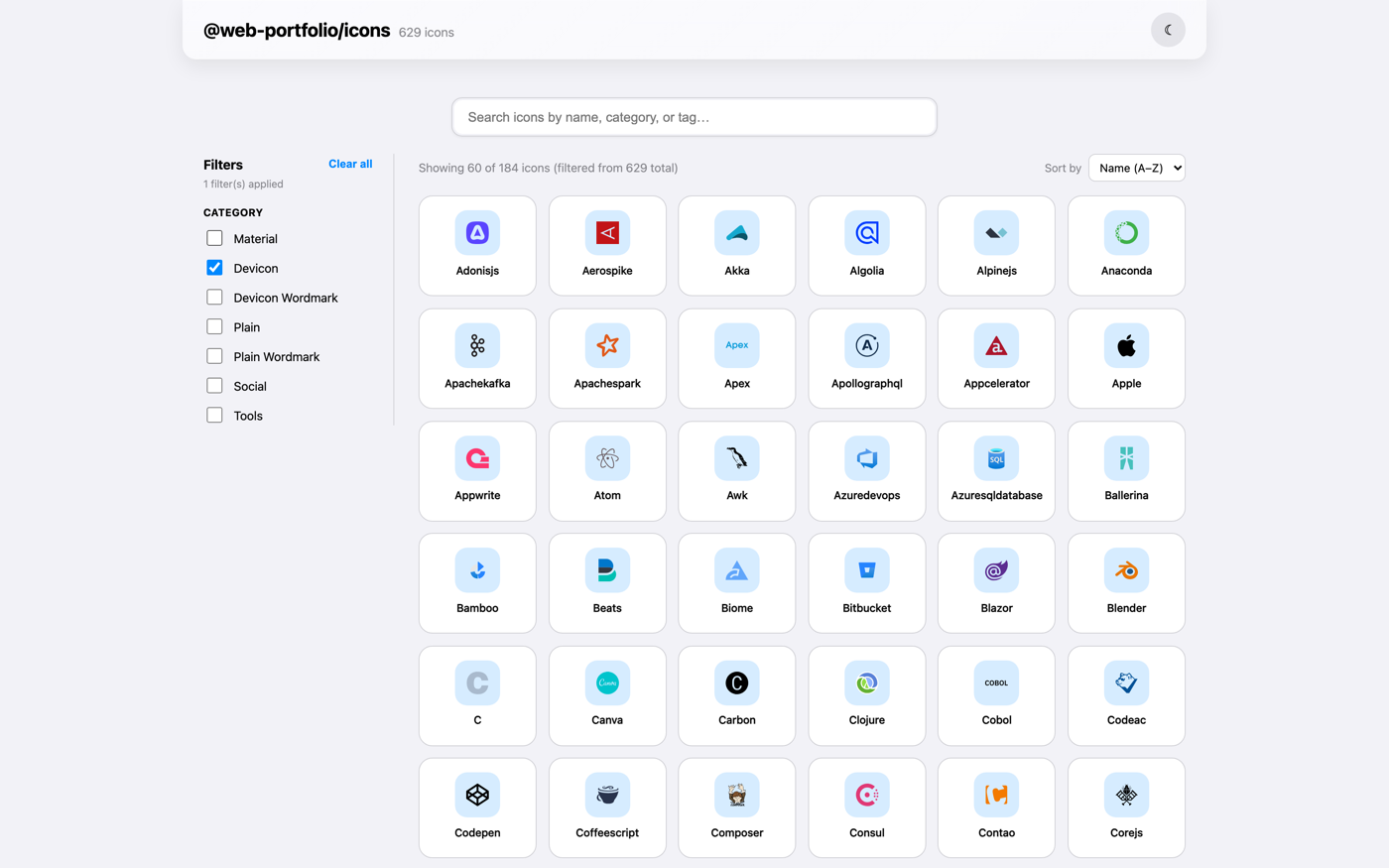
Browse the icon set → before you install, to see exactly what your editors will be choosing from.


v3.0.0 — ESM-only, built with @sanity/plugin-kit
@sanity/plugin-kit
and @sanity/pkg-utils instead
of a hand-rolled tsup config — the same toolchain Sanity's own plugin
ecosystem uses.require()/CJS entry point
(main, module fields, and the require export condition) has been
removed — Sanity Studio v3+ is pure ESM, so this plugin was never actually
loaded via require() in practice. If you import this package with
require() directly (outside a Studio config), switch to import.sanityIconPicker() export, same iconRef
schema type, same peer dependencies.97% smaller package
@web-portfolio/icons's <Icon>
component (added as a peer dependency, see below) and only carries the
lightweight search index — name, label, tags, category, no SVG markup —
that the picker's search and filtering actually need.@web-portfolio/icons to render the picked icon
on its frontend, that icon data is no longer downloaded twice.Security & supply chain
vitest to 3.2.7 and drizzle-orm to 0.45.2 across the monorepo,
and pinned several transitive dependencies (esbuild, sharp, postcss,
glob, js-yaml, uuid, prismjs, adm-zip, es-define-property) to
patched versions via pnpm overrides.esbuild,
sharp) instead of the whole dependency tree by default.sanity, @sanity/ui,
...), not this plugin's code.If you've built a portfolio, agency site, or any Sanity project with a "skills" or "tech stack" or "connect with us" section, you've probably built some version of an icon field before. This plugin is meant to save you from doing that again:
go leads with go, not
godot — exact matches first, then name prefixes, then everything that
merely mentions the term.@web-portfolio/icons)
and search metadata (via this plugin) are both bundled at build time, so
the picker opens instantly and works even if Studio is running offline."react", "github") rather than raw markup or an asset reference,
which pairs directly with @web-portfolio/icons's <Icon name="..." />
on your frontend — no lookups, no asset resolution, just the name.Card, Dialog, Badge, Select,
TextInput, Tooltip and @sanity/icons, sized off the Sanity UI space
scale. It inherits your Studio's theme and light/dark scheme instead of
fighting it, and respects readOnly fields and Studio's focus/presence
tracking like a built-in input.npm install @web-portfolio/icons-sanity
pnpm add @web-portfolio/icons-sanity
Peer dependencies:
sanity >=3, @sanity/ui >=2, @sanity/icons >=3, react >=18,
styled-components >=6 (already present in any standard Sanity Studio v3
project), plus @web-portfolio/icons >=1.0.1, which renders the icons this
plugin picks — install it if your Studio doesn't already have it.
Add the plugin to your Studio config:
// sanity.config.ts
import { defineConfig } from 'sanity'
import { sanityIconPicker } from '@web-portfolio/icons-sanity'

export default defineConfig({
  // ...your existing config
  plugins: [
    // ...your existing plugins
    sanityIconPicker(),
  ],
})
This registers an iconRef schema type you can use on any document or
object.
Use type: 'iconRef' on any field that should store an icon:
// schemaTypes/documents/skill.ts
import { defineField, defineType } from 'sanity'

export default defineType({
  name: 'skill',
  title: 'Skill',
  type: 'document',
  fields: [
    defineField({ name: 'name', type: 'string' }),
    defineField({ name: 'icon', title: 'Icon', type: 'iconRef' }),
  ],
})
In Studio, that renders as a field editors click to open a searchable grid.
They type "react" or "docker" or "mail", pick a result, and the field
stores that icon's name as a plain string — e.g. "react".
readOnly field (schema-level, or a role without write access) disables
both actions and emits no patches.If iconRef isn't the shape you want, the pieces are exported so you can
wire the same picker into a custom schema type or reuse its matching logic:
import {
  IconPickerInput, // the input component itself
  formatCategoryLabel, // "original" -> "Devicon"
  matchesQuery, // name/label/tag matching
  rankMatch, // relevance score, lower is better
  type IconEntry, // the shape matchesQuery/rankMatch expect
} from '@web-portfolio/icons-sanity'
defineField({
  name: 'socialLinks',
  title: 'Social links',
  type: 'array',
  of: [
    defineType({
      type: 'object',
      name: 'socialLink',
      fields: [
        defineField({ name: 'icon', type: 'iconRef' }),
        defineField({ name: 'url', type: 'url' }),
      ],
    }),
  ],
})
This is the part that makes the whole thing worth it — pair with
@web-portfolio/icons
and pass the stored string straight through as name, no transformation
needed:
import { Icon } from '@web-portfolio/icons'

function SkillBadge({ skill }: { skill: { name: string; icon: string } }) {
  return (
    <span>
      <Icon name={skill.icon} size={20} />
      {skill.name}
    </span>
  )
}
633 icons from three sources, shared with @web-portfolio/icons:
Not sure exactly what's in there? The gallery is the fastest way to check — search or filter by category to see every icon before you commit to using it in a schema.
MIT — see LICENSE. Bundled icon sets keep their original licenses (devicon: MIT, Material Symbols: Apache-2.0, Simple Icons: CC0-1.0) — see the repo README for full attribution.
FAQs
Sanity Studio icon picker input, backed by the same bundled registry as @web-portfolio/icons.
The npm package @web-portfolio/icons-sanity receives a total of 595 weekly downloads. As such, @web-portfolio/icons-sanity popularity was classified as not popular.
We found that @web-portfolio/icons-sanity demonstrated a healthy version release cadence and project activity because the last version was released less than a year ago. It has 1 open source maintainer collaborating on the project.
Product
Create ClickUp tasks from Socket alerts, automate ticketing with custom rules, and keep alert and task status synchronized.
Product
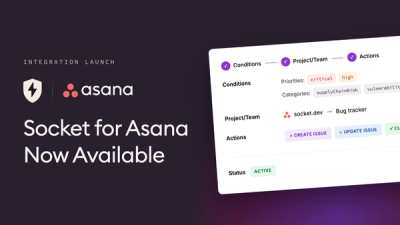
Create and manage Asana tasks directly from Socket alerts, with manual task creation, automated ticketing rules, and two-way sync.

Security News
Open VSX has removed three extension IDs from its malicious-extension list as the legitimate publishers they impersonated move to claim the names for themselves.