
Product
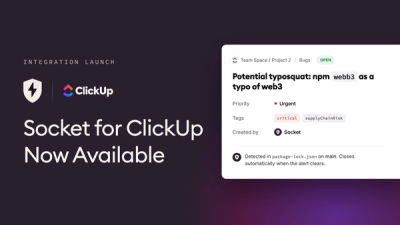
Socket for ClickUp Is Now Available
Create ClickUp tasks from Socket alerts, automate ticketing with custom rules, and keep alert and task status synchronized.
By Jeppe Hasseriis - Aug 26, 2026
Open security engineering for code written by humans and AI agents — every repair carries its own offline-verifiable proof.

English · 中文 · 🌐 dvalincode.dev







Open security engineering for code written by humans and AI agents.
Every repair carries its own proof.
When an agent fixes a security finding, someone has to decide whether the fix worked. Almost every tool asks the model that wrote it — which is the one question a model cannot answer against its own interest.
Dvalin decides instead, and hands you the proof. It re-scans, runs your project's own tests itself, and reads the exit codes from processes it started. Who wrote the repair — our agent, Claude Code, Codex, Copilot, a person — is recorded and never consulted. The result is a Verified Fix Record: a small JSON file anyone can re-check offline, on a laptop with no network and no Dvalin state.
dvalin verify-fix fix-record.json
Fix record 2c9d71ac03e0 · VERIFIED · scan-and-checks
  executor: claude-code (recorded, not consulted)
  targets: 1 before · 0 remaining
  coverage: complete → complete
  ✓ test: npm run test (exit 0)
  audit: run verify-36509f42 @ 414644c75af0
That record says something narrow on purpose: these findings were gone, and these checks were observed to pass. It is not a claim that your code is safe, and Dvalin will not let it be read as one — every record carries what the scan actually covered, and a repair no check could confirm does not pass. The open profile →
Dvalin is the independent security runtime between code generation and merge. Humans, coding agents, and CI call the same versioned contract for discovery, remediation, and verification. It runs independently, or interoperates with specialist systems such as Codex Security through portable SARIF. Its built-in coding capability is a remediation executor — not the trust boundary, and not an attempt to compete with every general-purpose coding agent. See the security-agent strategy.
npx dvalincode security scan .
# After installing the package: dvalin scan .
That is the whole thing. It runs the built-in rules for injection, hardcoded
secrets, XSS, eval, and unsafe shell use against the current directory and
prints what it found. No account, no model, no config, no code leaves your
machine. The default policy runs only Dvalin Built-in, so the first scan always
works. Add optional engines explicitly, or inspect their fixed install commands:
dvalin scanners list
dvalin scanners install semgrep       # review the command
dvalin scanners install semgrep --yes # execute it under Dvalin policy
For an incremental “no new high-risk findings” gate, commit the policy and baseline with the repository:
dvalin init
dvalin baseline
dvalin scan
This creates dvalin.security.json and .dvalin/baseline.json. Suppressions
require a reason and may have an owner and expiry date. Scan output is a
versioned envelope with a deterministic gate result and a resumable workflow ID.
# .github/workflows/security.yml
permissions:
  contents: read
  security-events: write
steps:
  - uses: actions/checkout@v5
    with:
      fetch-depth: 0        # so the scan can reach the base commit
  - uses: arthurpanhku/dvalincode@v0.18.0
    with:
      fail-on: high
      diff: true            # only report on what this PR changed
Findings land inline on the pull request diff and in your Security tab. No API key, no secrets, no model — the scan is deterministic and local to the runner. Full example →
diff: true reports only on lines the pull request changed, so the gate blocks
what this change adds instead of everything the repository already carried.
That is what makes the check adoptable on a codebase that was not clean to
begin with. Drop it to scan the whole repository.
Every comment states what the scan covered — complete, partial, or
unknown — beside the result, because "no findings" from a run where half the
engines were missing is not the same answer as "no findings" from a complete one.
If your pipeline produced a fix record, hand it to the same action:
  - uses: arthurpanhku/dvalincode@v0.18.0
    with:
      fix-record: fix-record.json
The runner re-derives the record from the file alone — recomputing its hash and re-deriving its verdict from its own evidence — and posts the result on the pull request. A record that was edited after it was issued fails here, and fails the job. The reviewer does not have to trust the pipeline that produced it, or us.
🔏 Verified Fix Record
✅ ce504a995395 · VERIFIED · scan-and-checks
- repaired by claude-code — recorded, and not consulted for this verdict
- targets: 1 before → 0 remaining
- coverage: complete → complete
- ✓ test: `npm run test` (exit 0)
- audit chain: verify-eeb1bae7 @ 80881867270d
If an agent is writing the code, something other than that agent has to check it. DvalinCode is an MCP server, so any agent that speaks MCP can:
claude mcp add dvalin -- npx -y dvalincode mcp-serve --workspace .
One command configures the editor you actually use:
npx dvalincode mcp-install cursor        # .cursor/mcp.json
npx dvalincode mcp-install vscode        # .vscode/mcp.json
npx dvalincode mcp-install claude-code   # .mcp.json
The formats differ in a way that fails silently — VS Code keys its servers under
servers, Cursor under mcpServers — so the command writes the right one and
merges into whatever is already there. Editors and MCP →
dvalin_scan accepts diff: "uncommitted", which reports only on what the
agent just wrote rather than everything the repository already carried — the
difference between a usable answer and a wall of pre-existing findings. It never
runs a model or edits the target workspace. It records a
small local workflow so an agent can retrieve one finding by fingerprint and
request an independent re-scan through dvalin_get_finding and
dvalin_verify_findings.
That last one is the point: an agent that has just written a repair can ask for
an independent verdict on it. Dvalin re-scans, runs the project's own checks
itself, and returns a Verified Fix Record — what was targeted, what remains,
which commands ran and the exit codes Dvalin observed, and how much of the
codebase was actually covered. Whoever wrote the repair is recorded and never
consulted. dvalin_verify_fix re-derives such a record offline, so the reviewer
receiving it does not have to trust the tool that issued it.
FVP-1 → Responses include MCP structuredContent; scanner
readiness is available through dvalin_list_scanners. The same server exposes
dvalin_run_task as an optional implementation helper, plus session and audit
evidence tools.
Verified end to end against Claude Code 2.1.226 and Codex 0.147.0, driving a real tool call against the published package rather than only completing a handshake. Agent integrations →
One server, reached the way each tool expects:
| Harness | How Dvalin reaches it |
|---|---|
| Claude Code | dvalincode mcp-install claude-code, or claude mcp add · skill |
| Codex | codex mcp add · SARIF interop with Codex Security |
| Cursor | dvalincode mcp-install cursor |
| VS Code | dvalincode mcp-install vscode · extension for the Problems panel — built, not yet published |
| Windsurf · Zed | stdio MCP through their own settings — server command |
| Any MCP client | MCP registry: io.github.arthurpanhku/dvalincode |
| GitHub Actions | Marketplace action — findings inline on the pull request diff |
| Any CI | dvalin scan . --fail-on high, SARIF out for code scanning |
The MCP config formats are not interchangeable — VS Code keys its servers under
servers, Cursor under mcpServers, and the wrong one fails silently — so
mcp-install writes the right shape and merges into whatever is already there.
Editors and MCP →
Codex Security can export a completed, sealed scan as SARIF. Import that portable projection without coupling Dvalin to Codex Security's private state directory:
DVALIN_CODEX_SCAN_DIR=/tmp/codex-security-results
npx @openai/codex-security scan . --output-dir "$DVALIN_CODEX_SCAN_DIR"
npx @openai/codex-security export "$DVALIN_CODEX_SCAN_DIR" \
  --export-format sarif --source-root "$PWD" --output /tmp/codex-security.sarif

dvalin import /tmp/codex-security.sarif .
dvalin scan . --fail-on high
The import creates stable Dvalin remediation cases; --no-persist validates the
handoff without changing the backlog. Keep Codex Security's original manifest,
findings, and coverage artifacts together—Dvalin imports the SARIF finding
projection but does not rewrite its sealed bundle or reinterpret its coverage.
Integration guide →
dvalincode dvalin . --fix --verify --draft-pr
This step does use a model — your model, any OpenAI-compatible endpoint. It prepares focused repairs in an isolated worktree, runs your tests, and requires a clean re-scan before anything can proceed to a draft PR. It never auto-merges, and a clean scan is never treated as proof that the code is safe.

This animation is made from the real application, not a mock. The input is an Apache-2.0-licensed example adapted from OWASP NodeGoat, whose contribution route evaluated user-controlled text.
Dvalin turns open-source scanner evidence into a controlled scan → fix → test → re-scan → draft-PR workflow. Here is the run in the animation above, measured:
| Real NodeGoat-derived run | Before | After Dvalin remediation |
|---|---|---|
| Security health (triage heuristic) | 22 / 100 · F | 100 / 100 · A |
| Findings | 10 (eval across 3 rules, 2 engines) | 0 |
| Tests | 2 passing | 3 passing, including an injection regression test |
| Scanner fleet | 4 / 4 completed | 4 / 4 completed |
The scanning and hardening control plane uses open-source components:
The scanners find and rank evidence. The configured model proposes source changes; DvalinCode constrains that work, records the diff, runs project tests, re-scans the changed tree, and keeps PR publication explicit. It does not auto-merge and it does not claim that a clean scan proves the absence of bugs. Choose an open-weight model through Ollama if the repair-proposal step must also stay fully local and open; hosted model licensing depends on the provider.
You can still prove what the agent did after the fact:
dvalincode report verify # re-derive the hash chain of the last run's audit log
That last command is the part that matters once more than one person depends on this. DvalinCode is a full coding agent — terminal, web GUI, and desktop app — built so that an organization, not the developer, bounds what it may do: a policy file constrains modes, commands, paths, tools, and models; every run is hash-chained into a tamper-evident audit log; nothing reaches a provider that the egress guard did not allow. A repo policy can only ever narrow the machine-level one.
If you are the person who has to approve this class of tool, start at APPROVABILITY-PLAN.md and the Evidence Pack that every release ships of itself.
| 🏠 Home | One place for read-only Ask and approval-gated Collaborate workflows. Switch intent without leaving the project or conversation. |
| ⚡ Code | Focused autonomous coding with full tool access and Ask / Plan / Auto / Bypass permission levels. Security and browser routines no longer compete with the core coding workflow. |
| 🛡️ Dvalin | Dedicated white-box security engineering: orchestrate the built-in scanner plus installed Semgrep CE, Trivy, and OSV-Scanner; triage findings; create isolated fixes; run tests and re-scan; then explicitly publish a reviewable draft PR. Dvalin guide → |
| 🏦 Regulated teams | Designed for finance, healthcare, security-sensitive SaaS, and internal platform teams that need AI coding under policy, audit, data minimization, and supply-chain review — not just developer convenience. |
| 🛡️ Secure remediation | Run a multi-engine scan or import SARIF from CodeQL, GitHub Code Scanning, Semgrep, or compatible scanners, then create an isolated remediation worktree and turn findings into focused repair tasks with source context, verification evidence, and PR-ready reporting. Workflow → |
| 📚 Skills | Upload, download, and inspect local skill bundles. DvalinCode ships built-in secure-code-scan and secure-code-remediation skills, plus agent tools for listing skills, reading skill instructions, scanning, listing cases, and preparing remediation worktrees. Format → |
| 🛡️ Audit trail | Every run emits a tamper-evident, hash-chained JSONL log — every file read/written, every command, every approval. A Run Report renders it as Markdown; dvalincode report verify proves the chain is intact. Threat model → |
🔒 Org policy & trust | A company — not the developer — bounds the agent. A dvalin.policy.json constrains modes, shell commands, file paths, tools, and models; a repo policy can only ever narrow the machine-level one, never widen it. Each run records the governing policy's hash. dvalincode trust prints the install's live security posture — active policy + hashes, audit status, runtime — so a reviewer can verify it directly. Policy reference → · Approvability plan → |
| 🏛️ Governance evidence | OpenSSF Scorecard, CodeQL, Dependabot, pinned GitHub Actions, CODEOWNERS, and ISO/IEC 42001 AIMS alignment docs are maintained as reviewable project evidence, and every release ships an Evidence Pack the binary produced of itself. Scorecard map → · ISO 42001 alignment → · Release evidence → |
| 📐 Open specs | PCP-1 — the provider-boundary contract (egress containment, credential containment, audit, policy binding) written as a vendor-neutral profile with test procedures, so any agent runtime can run it against its own adapters and publish the result. Not a DvalinCode test file; a checklist anyone can hold us to as well. Provider Conformance Profile → |
| 🖥️ First-class GUI | Modern web UI with code highlighting, file @-references, / slash commands, Git branch indicator, live token + cost counter, multi-profile LLM config, and a dark / light / system theme switcher. |
| 🖥️ Terminal or web — one binary | Run it bare for an interactive terminal agent with streaming output, inline approvals, and red/green diffs, or dvalincode serve to host the web GUI for browser/remote use. Both frontends drive the same agent core. |
| 🖥️ Native desktop app | DvalinCode.app — a real dock application (OS-native webview, no Electron) over the same engine. On macOS the one-line installer puts it in /Applications automatically; launch it straight from Launchpad. |
| 🪶 Zero-dependency binary | Single ~25MB executable per platform. No Node, no Python, no Docker. |
| 🔐 Local-first | Sessions, config, profiles, and audit logs live in ~/.dvalincode/. .dvalincodeignore blocks the agent from reading sensitive files. AGENTS.md in your repo becomes persistent project instructions. |
| 💾 Portable & exportable | Export all local data (memory, sessions, config, audit) to one file and import it on another machine — your setup moves with you. Any conversation downloads as a clean Markdown transcript. |
Make every code-producing human or agent pass the same independent security gate.
DvalinCode is built as an agent-compatible security runtime, not another general coding-agent benchmark entry. The core product is scan evidence, policy, baseline, deterministic verification, and portable interfaces that a human developer, an external agent, or CI can all call. The bundled coding agent stays capable enough to implement and test focused remediations reliably; its model prose never decides whether the security gate passed.
dvalincode trust makes the posture self-verifiable (transparent), and the hash-chained log proves what every run did (auditable). Those three together are exactly what a security review needs to say yes — and what cloud, closed, mutable-log agents structurally struggle to provide. Approvability plan →The bundled web GUI is the runtime's reference implementation and showcase — the first consumer of that public API, demonstrating everything the runtime can do.
DvalinCode is differentiated by approvability. It is built for teams that need AI coding to pass security, compliance, and data-governance review before it can touch production repositories.
dvalin/remediate/... worktree; then send a focused repair prompt with
source context and verification instructions.~/.dvalincode/; .dvalincodeignore and policy controls
bound what the agent can read, write, or execute.



DvalinCode maintains project-level governance evidence for open-source and enterprise review. This is the differentiator for teams where AI coding must pass security approval before it can reach production repositories:
AGENTS.md, poisoned MCP servers, prompt-injection escalation,
egress, audit tampering, supply chain, sandbox escape), each mapped to the
control that defends it and the honest residual gap. Threat model →These documents are implementation evidence and operating procedures; they do not claim third-party ISO certification.
continue
resumes from the actual workspace progress.git and GitHub CLI
(gh) operations now support pull, push, PR creation, and Actions/repository
commands through the governed shell approval path.prepublishOnly runs the build, typecheck, and test suite before publishing.DvalinCode.app
opens a real dock window (WKWebView, no Electron) over the embedded engine.
Two threading bugs that shipped in every earlier desktop build are fixed:
the blocking webview loop no longer starves the embedded server (blank
window), and the webview runs on the main thread as macOS requires (no
window at all) — the server now lives in a child process of the same binary.curl … install.sh | bash now also puts DvalinCode.app (with the
DvalinCode icon) into /Applications, so the desktop window launches
straight from Launchpad after a CLI install. Opt out with
DVALINCODE_NO_APP=1; pin with DVALINCODE_GUI_VERSION.dvalin.policy.json lets a company, not the developer, bound the agent: which modes, shell commands, file paths, tools, and models are allowed. Two layers (machine ~/.dvalincode/policy.json + repo) resolve by narrowing — a repo policy can only ever make the machine policy stricter, never widen it. With no policy file, behavior is identical to before. Enforced at a single chokepoint; every denial is an inline ⛔ Blocked by policy plus a policy_violation audit event. Policy reference →dvalincode trust — prints this install's live security posture in one command — active policy + source hashes, audit status, runtime, dependencies — so a reviewer can verify what the agent may and may not do directly, instead of taking claims on trust. --json for tooling.dvalincode policy check — validates dvalin.policy.json against the schema, prints the resolved policy + canonical hash (after narrowing with the machine layer), and exits non-zero on failure — for CI and policy authoring. Policy reference →run_start, so the tamper-evident log proves which rules were in force.dvalincode export / dvalincode import, or the Export / Import buttons in the GUI Settings panel.dvalincode session md <id>, or GET /api/sessions/:id/markdown.DvalinCode.app on macOS, plus Windows/Linux builds. Built with webview-bun using the OS-native webview (WKWebView / WebView2 / WebKitGTK) — no Electron, stays a small self-contained binary.dvalincode binary is now positioned purely as the CLI (terminal + serve).serve · shared turn-runnerdvalincode bare for an interactive terminal coding agent, Claude-Code-style: streaming responses, inline [y/N] write approvals with red/green diffs, /mode · /clear · /git · /plan · /compact · /undo · /help, Ctrl-C to interrupt, and a guided first-run provider setup. Defaults to read-only Chat, switchable live.dvalincode serve — the web GUI now lives behind a command, so the same binary deploys headless on a server: dvalincode serve --host 0.0.0.0 --no-open.src/agent/session.ts), keeping them at feature parity.~/.dvalincode/audit/ (run_start, every tool_call / file_* / shell_exec / approval, run_end). The hash chain makes any after-the-fact edit detectable. No local coding agent ships verifiable behavior logs. Format + threat model →dvalincode report CLI — a Markdown summary of each run (files read/changed, commands, decisions, test result), rendered as a collapsible card in the GUI and from the CLI:
dvalincode report --last           # render the most recent run
dvalincode report <run-id> --format json
dvalincode report verify <run-id>  # ✓ chain intact / ✗ broken at seq N
system follows your OS live; the choice persists across sessions./compact · dvalin.json team playbook · self-contained binaries/compact — LLM-based context compaction: replaces conversation history with a structured five-section summary (Goal / Completed / Decisions / Current State / Pending). A divider in the chat thread shows the token reduction (e.g. 8,412 → 1,203 tokens −85%).dvalin.json team playbook — commit a shared set of automation prompts to your repo. The sidebar loads them automatically and lets teammates run the same one-click routines without any manual setup. Export button converts your personal routines to dvalin.json in one click.bun --compile so the web UI is bundled alongside the server binary.localStorage.curl … | bash auto-detects your OS + arch, drops the binary into ~/.dvalincode/, and patches your PATH. No package manager dependencies.A real Dvalin scan of vulnerable code — Security health 22/100 · F, with the 10 findings the engines actually reported, located to the line:

The verified result — a real model-driven Verify turn inspected the repair, ran the regression tests and all four open-source engines, then the deterministic server re-scan reported complete coverage, a passing gate, 0 findings, 100/100 · A:

Home → Code → Dvalin — the current workspaces:

The scan images above are unedited captures of a real run against the documented NodeGoat-derived case: the scanners were run, the model repaired the source, the project's tests were run, and the tree was re-scanned. Nothing is staged, and a 100/A means the configured engines found nothing — not that the code is proven safe.
| If you need… | DvalinCode's answer |
|---|---|
| An agent your security team can approve | Policy-bound tools, explicit approval modes, dvalincode trust, audit logs, OpenSSF evidence, and ISO/IEC 42001 alignment docs. |
| AI coding for regulated repositories — finance, healthcare, enterprise data, customer-confidential code | Local-first runtime, bring-your-own-model, .dvalincodeignore, governed egress, and minimized audit records. |
| A safer alternative to generic autonomous coding agents | The product thesis is controllable / transparent / auditable, not only "the model can edit files". |
| IDE-centric AI workflows | Zero-dep binary (~25 MB). Runs anywhere, no IDE required. macOS shell is sandboxed by default — network denied, writes capped to cwd. |
| Terminal-first AI workflows | CLI start → auto-opens a modern Web UI with code highlighting and red/green diff approval. One install command, nothing else needed. |
| Cloud-only AI workflows | Every OpenAI-compatible endpoint is a first-class citizen. Run Ollama with Qwen2.5-Coder: no key, no internet, no per-token cost. |
| Single-machine AI setup | AGENTS.md committed to the repo ships AI context to every clone. dvalin.json ships the team's automation commands the same way — export from the sidebar, commit, done. |
brew tap arthurpanhku/dvalincode https://github.com/arthurpanhku/dvalincode
brew install arthurpanhku/dvalincode/dvalincode
Installs the same signed-by-checksum release archive the one-liner does, and
brew upgrade keeps it current. Homebrew never applies the macOS quarantine
attribute, so this path is not subject to Gatekeeper.
curl -fsSL https://raw.githubusercontent.com/arthurpanhku/dvalincode/main/scripts/install.sh | bash
Detects your OS + arch, downloads the right binary, installs to ~/.dvalincode/, and adds it to your PATH. On macOS it also installs the native DvalinCode.app into /Applications (skip with DVALINCODE_NO_APP=1), so the desktop window launches straight from Launchpad. After reload:
source ~/.zshrc    # or ~/.bashrc
dvalincode                       # interactive terminal agent
dvalincode dvalin .              # white-box security scan (GUI-independent)
dvalincode serve                 # start the web GUI, open the browser
dvalincode serve --host 0.0.0.0 --no-open   # host it on a server for remote/browser use
echo "inspect src and summarize" | dvalincode run - --output-format stream-json
dvalincode mcp-serve             # task-level stdio MCP server for external agents
Headless run and mcp-serve keep the same policy and audit chokepoint as
the interactive clients. See the unattended recipes
for cron, CI, and external-agent examples.
Download dvalincode-v*-windows-x64.zip from Releases, unzip, then double-click start.bat.
Grab the archive for your platform from the Releases page:
| Platform | Archive |
|---|---|
| macOS Apple Silicon (M1/M2/M3) | dvalincode-v*-macos-arm64.tar.gz |
| macOS Intel | dvalincode-v*-macos-x64.tar.gz |
| Windows x64 | dvalincode-v*-windows-x64.zip |
| Linux ARM64 | dvalincode-v*-linux-arm64.tar.gz |
| Linux x64 | dvalincode-v*-linux-x64.tar.gz |
Verify against SHA256SUMS.txt (included in each release).
Each release also ships dvalincode-v*-evidence.json — an Evidence Pack the
shipped binary produced of itself on the build machine: two real governed runs,
one allowed and one blocked by policy, with their hash chains. You can check the
claims on this page before installing anything:
dvalincode evidence verify dvalincode-v0.14.0-evidence.json # offline, reads only the file
The pack's checksum is inside SHA256SUMS.txt, which is the subject of the
release's build-provenance attestation. How it is produced →
macOS Gatekeeper: binaries are unsigned. On first run, either clear the quarantine flag with
xattr -dr com.apple.quarantine ~/.dvalincode, or right-click the binary in Finder → Open → confirm.
DvalinCode updates itself — no need to re-run the installer:
dvalincode update --check   # is a newer release out? (read-only)
dvalincode update           # download, verify, and install the latest
It finds the newest release on GitHub, and for a binary install downloads the
matching archive, verifies it against the release's SHA256SUMS.txt before
swapping anything in, then replaces ~/.dvalincode/ in place. npm installs are
updated via npm i -g, and source checkouts are pointed at git pull. Add
-y to skip the prompt, --prerelease to track pre-releases, or --json for
scripting.
The macOS desktop app checks the separate gui-v* release track when it starts.
When a newer GUI is available, it asks before downloading, verifies the archive
against SHA256SUMS-gui.txt, validates the app version, then replaces and
restarts DvalinCode.app. A failed replacement rolls back to the previous app.
Terminal (default): run dvalincode. On first launch it walks you through a one-time provider setup (pick a provider, paste your API key, choose a model) and saves it to ~/.dvalincode/config.json. Then you're at the prompt — type to chat, /mode to switch between Chat / Cowork / Code / Dvalin, /help for commands. In the GUI, Chat and Cowork are grouped under Home.
Web GUI: run dvalincode serve and:
http://localhost:3000 and your browser opens automatically.fast, cheap, local-ollama) to switch quickly later.Both share the same config and sessions in ~/.dvalincode/.
| Category | Feature | Notes |
|---|---|---|
| Modes | Home / Code / Dvalin | Home contains read-only Ask and approval-gated Collaborate; Code is focused autonomous development; Dvalin is the scan-to-fix security workspace |
| Code permissions | Ask Permissions / Plan Mode / Auto Mode / Bypass permissions | Verified behavior: Ask requests approval before writes/commands, Plan is read-only and does not write files, Auto runs operations automatically, Bypass runs without confirmation prompts |
| Workspaces | Open folder / Import Git / Add worktree | Cowork and Code can switch to a local folder, clone a Git project, or create a Git worktree from the UI |
| Governance | OpenSSF Scorecard / ISO 42001 AIMS alignment | Scorecard, CodeQL, Dependabot, pinned Actions, AI impact assessment, risk register, and review cadence are documented under docs/security/ and docs/governance/ |
| Secure remediation | Built-in + Semgrep CE + Trivy + OSV-Scanner / SARIF / cases / worktrees / tests / draft PR | Dvalin detects installed engines, normalizes SARIF, scores risk, persists cases, drives evidence-backed fixes, verifies changes, and publishes only after an explicit user action |
| Skills | Upload / download / built-in security skills | Skills live under ~/.dvalincode/skills; built-ins guide security scanning and remediation with dedicated agent tools. Format → |
| Composer | @ file references | Type @ for a fuzzy file search; selected files get inlined into the prompt |
/ slash commands | /clear /compact /git /plan /undo /help | |
| Multiline + interrupt | Shift+Enter for newline, stop button to abort mid-stream | |
| Tool UI | Inline diffs | edit_file and write_file results render as red/green unified diff, default folded |
| Approval dialog with diff | Cowork mode shows the diff before the change is applied | |
| Live tool counter + token + cost | Topbar shows session totals in real time | |
| Agent | LLM-based context compaction | /compact summarises into Goal / Completed / Decisions / Pending |
| Persistent undo stack | /undo [N] reverses the last N tool calls | |
| Run Report | Markdown summary per run (files, commands, decisions, test result) — GUI card + dvalincode report | |
| Git awareness | Branch name in topbar; git_status tool; git context auto-injected into prompt | |
AGENTS.md project memory | Per-repo persistent instructions, auto-loaded each turn | |
| Security | Tamper-evident audit trail | Hash-chained JSONL per run in ~/.dvalincode/audit/; dvalincode report verify detects edits |
| macOS shell sandbox | sandbox-exec denies network; allows writes only inside cwd + /tmp | |
.dvalincodeignore | gitignore-style exclusion; blocks read_file / list_files / search_text | |
| Per-action approval | Approve/deny each write / delete / shell call in Cowork mode | |
| Appearance | Theme switcher | Dark / light / system, persisted; system follows the OS live |
| Providers | OpenAI-compatible endpoints | DeepSeek · OpenAI · Groq · OpenRouter · Ollama · custom |
| Multi-profile config | Save and switch between named (provider, model, API key) sets | |
| Sessions | Auto-save + restore | All sessions persisted to ~/.dvalincode/sessions/ as JSON |
| LLM summary memory | Cross-session summary keeps the agent oriented after restart | |
| Memory | Local user/project memory | Searchable facts, preferences, and decisions in ~/.dvalincode/memory/; import from Claude/Hermes/Markdown |
| Data portability | Export / import all data | One bundle of memory + sessions + config + audit — dvalincode export / import, or GUI Settings → Export / Import |
| Markdown transcript | Download any conversation as Markdown — sidebar download icon, dvalincode session md <id>, or /api/sessions/:id/markdown |
| Command | Description |
|---|---|
/clear | Clear the current conversation (client-side, starts a fresh session) |
/compact | LLM-based context compaction — replaces history with a structured summary |
/undo [N] | Reverse the last N tool calls (default 1) |
/git | Run git_status and show branch, recent commits, changed files |
/plan <task> | Ask the agent to plan the task step-by-step without executing |
/help | Show all available slash commands |
┌───────────────────────────┐   ┌─────────────────────────┐
│  Terminal UI (readline)   │   │  Browser GUI (React/Vite)│
│  streaming · approvals    │   │  ChatThread · DiffViewer │
└─────────────┬─────────────┘   └────────────┬────────────┘
              │ in-process          HTTP / WebSocket
              │                ┌───────────────▼─────────────┐
              │                │  Express + ws server         │
              │                │  /api/* · `dvalincode serve` │
              │                └───────────────┬─────────────┘
              └──────────────┬─────────────────┘
┌────────────────────────────▼────────────────────────────┐
│  runAgentTurn — shared turn-runner (src/agent/session)   │
│  provider · prompt (mode · git · AGENTS.md) · session    │
└────────────────────────────┬────────────────────────────┘
                             │
┌────────────────────────────▼────────────────────────────┐
│                    Agent Engine                          │
│  AgentLoop (8-state machine) → AgentRunner              │
│  Streaming · Interrupt · Undo stack · LLM compaction    │
│  run_start / run_end → AuditSink (hash-chained JSONL)   │
└──────────────────────────┬──────────────────────────────┘
                           │ run()
┌──────────────────────────▼──────────────────────────────┐
│  ToolRegistry — Zod schemas + permission gating         │
│  + audit taps: tool_call · file_* · shell_exec          │
│  read_file · list_files · search_text · git_status ·    │
│  write_file · edit_file · delete_file · shell           │
└─────────────────────────────────────────────────────────┘
RESTORE → COMPACT → COMMAND → BUILD → RUN → SAVE → RESPOND → DONE
~/.dvalincode/sessions/AgentRunner for the LLM tool-calling loopnpm test
442 tests · 62 files · all green.
Requires Bun (curl -fsSL https://bun.sh/install | bash).
git clone https://github.com/arthurpanhku/dvalincode
cd dvalincode
npm install
npm run dev:all                 # start backend (3001) + Vite (5173)
Build release binaries for every platform:
bash scripts/build-release.sh   # → release/ with tar.gz / zip + SHA256SUMS.txt
bash scripts/build-release.sh darwin    # macOS only
bash scripts/build-release.sh windows   # Windows only
Before publishing a release:
(cd release && shasum -a 256 -c SHA256SUMS.txt)
unzip -l release/dvalincode-v*-windows-x64.zip | grep 'web/dist/index.html'
tar tzf release/dvalincode-v*-macos-arm64.tar.gz | grep 'DvalinCode.app/Contents/Resources/AppIcon.icns'
Windows smoke test: unzip dvalincode-v*-windows-x64.zip on Windows and run start.bat from the extracted folder. The server should open http://localhost:3000. If it reports an ENOENT path under B:\~BUN\root\web\dist, the compiled Bun virtual path detection has regressed; the packaged binary must resolve web/dist beside the extracted executable.
Note: Bun only allows Windows .exe icon/metadata injection when compiling on Windows. macOS/Linux cross-builds still produce a valid Windows archive, but without an embedded .exe icon.
DvalinCode supports any OpenAI-compatible endpoint. Built-in presets, sorted by cost:
| Provider | Cheapest model | Input / Output | Notes |
|---|---|---|---|
| Groq | llama-3.1-8b-instant | Free tier | Fastest open models — Llama 3.3 70B, Mixtral |
| Ollama | qwen2.5-coder | $0 (local) | No API key needed, runs on your machine |
| DeepSeek | deepseek-chat | $0.14 / $0.28 per 1M | Cheap and strong; v3 nearly matches GPT-4 quality |
| OpenRouter | google/gemini-2.0-flash-001 | $0.10 / $0.40 per 1M | 200+ models including Claude, Gemini, Llama |
| OpenAI | gpt-4o-mini | $0.15 / $0.60 per 1M | Reliable; o1 available for deep reasoning |
| Custom | — | depends | Any OpenAI-compatible base URL |
DvalinCode shows the per-session cost live in the topbar — flip between providers in the LLM Configuration modal, save named profiles, and compare on the fly.
~/.dvalincode/. To exclude sensitive files from the agent's view, drop a .dvalincodeignore in your repo root (gitignore-style patterns).
ollama pull qwen2.5-coder), then in the LLM Configuration modal pick the Ollama provider. No key, no internet, no per-token cost.
sandbox-exec; on Linux, restrictive network policies use Bubblewrap when installed. Windows has no supported subprocess network sandbox yet, so restrictive policies fail closed instead of silently running unrestricted. The native command runner itself works on all three platforms.
/bin/sh; Windows commands run through the system ComSpec (cmd.exe by default). Full native command lines support pipes, redirects, and conditional operators. The split command + args form quotes executable paths and arguments for the host shell.
~/.dvalincode/audit/run-<timestamp>-<id>.jsonl. Render it with dvalincode report --last (or see the collapsible Run Report card in the GUI). Each record is chained to the previous one with a SHA-256 hash, so any after-the-fact edit is detectable — dvalincode report verify <run-id> reports ✓ chain intact or the exact position of a break. It's tamper-evident, not tamper-proof: a local attacker who can rewrite the whole file could recompute the chain. The value is forensic/accountability. See docs/AUDIT-TRAIL.md for the full threat model.
xattr -dr com.apple.quarantine ~/.dvalincodeAGENTS.md get sent every turn?AGENTS.md from the project root before each turn and injects it under === PROJECT INSTRUCTIONS === in the system prompt. Keep it focused — it counts toward your token budget.
Contributions welcome. The codebase is intentionally small and surgical — see CONTRIBUTING.md.
git clone https://github.com/arthurpanhku/dvalincode
cd dvalincode && npm install
npm test                # 442/442 ✅
npm run typecheck
MIT — see LICENSE.
DvalinCode is an independent implementation. It is not affiliated with, sponsored by, or endorsed by Anthropic, Claude, Claude Code, OpenAI, OpenAI Codex, GitHub, Cursor, Aider, opencode, Cline, HKUDS/nanobot, or any other project or vendor named here.
We gratefully acknowledge that DvalinCode's product direction and architecture were informed by public research, open-source projects, published papers, standards, release notes, and common workflow patterns across the agentic coding ecosystem:
TurnState flow.tool_calls message format, along with the broader
OpenAI-compatible provider ecosystem, gives DvalinCode a portable interface
for model/tool interaction.AGENTS.md project-instruction convention, common in coding-agent tools,
informed DvalinCode's project-local instruction loading behavior.These references shaped our understanding of what users expect from coding agents. DvalinCode's source code, prompts, UI text, tool schemas, module layout, and product implementation remain original unless explicitly noted. No source code, prompts, or UI text from the projects above was copied.
Full source references: docs/REFERENCES.md
Every issue, idea, documentation improvement, test, and code contribution helps make DvalinCode better.
| Contributor | GitHub profile |
|---|---|
| Arthur Pan | @arthurpanhku |
| Shivas | @shivasb42 |
| Aditya | @adity982 |
| badhope | @weed33834 |
See the complete contribution history, including automated dependency and maintenance updates.
Want to join them? Read the contribution guide and send your first pull request.
FAQs
Open security engineering for code written by humans and AI agents — every repair carries its own offline-verifiable proof.
The npm package dvalincode receives a total of 74 weekly downloads. As such, dvalincode popularity was classified as not popular.
We found that dvalincode demonstrated a healthy version release cadence and project activity because the last version was released less than a year ago. It has 1 open source maintainer collaborating on the project.
Product
Create ClickUp tasks from Socket alerts, automate ticketing with custom rules, and keep alert and task status synchronized.
Product
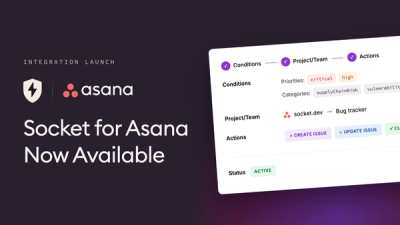
Create and manage Asana tasks directly from Socket alerts, with manual task creation, automated ticketing rules, and two-way sync.

Security News
Open VSX has removed three extension IDs from its malicious-extension list as the legitimate publishers they impersonated move to claim the names for themselves.