

Product
Introducing Repository Access Permissions and Custom Roles
Socket now supports Custom Roles and Repository Access Permissions so organizations can control who can access specific repositories and actions.
By Joe Werle - Jun 19, 2026
generate-query
Advanced tools



Generate GraphQL queries from JavaScript objects.
This module was originally designed to be used with the generate-graphql-code module. It can generate TypeScript code for you from your GraphQL introspection.
Table of contents:
# with pnpm
pnpm i generate-query
# or with npm
npm i generate-query
import generateQuery from 'generate-query'

const query = generateQuery({
  /**
   * Operation type, can be 'query', 'mutation' or 'subscription'.
   *
   * Default: 'query'.
   */
  type: 'query',

  /**
   * Operation body.
   */
  body: {
    /**
     * Describe the field we want to fetch.
     */
    users: {
      /**
       * Optional arguments.
       */
      args: {
        first: 10,

        /**
         * If the value is `undefined`, the field will be skipped.
         */
        after: undefined,

        /**
         * Argument value can be nested objects.
         */
        where: {
          verified: true,
          deletedAt: null
        },

        orderBy: {
          field: 'created_at',

          /**
           * If the value is an object with only one key named `$enum`,
           * the value will be processed as enum.
           *
           * Enum value will not be double-quoted.
           */
          direction: { $enum: 'DESC' }
        }
      },

      /**
       * Specify the fields we want to fetch.
       */
      fields: {
        id: true,

        /**
         * If the value type is `number`, it will be treated as `true`
         * if it is not `0`.
         */
        name: 1,

        /**
         * If the value is a string and it is not an empty string,
         * the string will be used as the alias of this field.
         * If the value is an empty string, the field will be skipped.
         */
        lastName: 'familyName',

        /**
         * The fields with falsy values will be ignored.
         */
        nickname: '',
        createdAt: false,
        updatedAt: null,
        deletedAt: undefined,
        verifiedAt: 0,

        /**
         * Example of selecting sub-fields.
         */
        friends: {
          id: 1,
          name: 1
        },

        /**
         * The array value will be special treated.
         * The objects in the array is used to describe the field.
         * We can specify the alias, arguments, directives and fields
         * of sub-fields by passing an array of object.
         */
        posts: [
          {
            /**
             * Optional alias.
             */
            alias: 'top5posts',

            /**
             * Optional arguments.
             */
            args: {
              first: 5,
              orderBy: {
                field: 'total_like',
                direction: { $enum: 'DESC' }
              }
            },

            /**
             * Optional directives.
             */
            directives: {
              name: '@include',
              args: {
                if: true
              }
            },

            /**
             * Optional fields.
             */
            fields: {
              id: true,
              title: true
            }
          }
        ]
      }
    }
  }
})

console.log(query)
The output is:
query {
  users (
    first: 10
    where: {
      verified: true
      deletedAt: null
    }
    orderBy: {
      field: "created_at"
      direction: DESC
    }
  ) {
    id
    name
    familyName: lastName
    friends {
      id
      name
    }
    top5posts: posts (
      first: 5
      orderBy: {
        field: "total_like"
        direction: DESC
      }
    ) @include (
      if: true
    ) {
      id
      title
    }
  }
}
import generateQuery from 'generate-query'

const query = generateQuery({
  body: {
    users: {
      fields: {
        id: true,

        /**
         * If the type of the value is `number`,
         * it will be treated as `true` if it is not `0`.
         */
        name: 1,

        posts: {
          id: true,
          title: true
        }
      }
    }
  }
})

console.log(query)
The output is:
query {
  users {
    id
    name
    posts {
      id
      title
    }
  }
}
import generateQuery from 'generate-query'

const query = generateQuery({
  body: {
    users: {
      args: {
        first: 10,
        after: undefined, // The `undefined` value will be skipped
        where: {
          statusIn: [1, 2],
          deletedAt: null
        }
      },
      fields: {
        id: true,
        name: true
      }
    }
  }
})

console.log(query)
The output is:
query {
  users (
    first: 10
    where: {
      statusIn: [1, 2]
      deletedAt: null
    }
  ) {
    id
    name
  }
}
import generateQuery from 'generate-query'

const query = generateQuery({
  body: {
    users: {
      alias: 'first_10_users',
      args: { first: 10 },
      fields: { id: true }
    }
  }
})

console.log(query)
The output is:
query {
  first_10_users: users (
    first: 10
  ) {
    id
  }
}
import generateQuery from 'generate-query'

const query = generateQuery({
  body: {
    users: [
      {
        alias: 'first_10_users',
        args: { first: 10 },
        fields: { id: true }
      },
      {
        alias: 'deleted_users',
        args: { first: 10, deleted: true },
        fields: { id: true }
      }
    ]
  }
})

console.log(query)
The output is:
query {
  first_10_users: users (
    first: 10
  ) {
    id
  }
  deleted_users: users (
    first: 10
    deleted: true
  ) {
    id
  }
}
import generateQuery from 'generate-query'

const query = generateQuery({
  body: {
    users: {
      fields: {
        id: true,
        name: true,
        posts: [
          {
            args: {
              first: 5,
              orderBy: 'total_like'
            },
            fields: {
              id: true,
              title: true
            }
          }
        ]
      }
    }
  }
})

console.log(query)
The output is:
query {
  users {
    id
    name
    posts (
      first: 5
      orderBy: "total_like"
    ) {
      id
      title
    }
  }
}
import generateQuery from 'generate-query'

const query = generateQuery({
  body: {
    countries: {
      fields: {
        code: 'country_code',
        name: [
          {
            alias: 'country_name',
            args: {
              lang: 'en'
            }
          }
        ]
      }
    }
  }
})

console.log(query)
The output is:
query {
  countries {
    country_code: code
    country_name: name (
      lang: "en"
    )
  }
}
import generateQuery from 'generate-query'

const query = generateQuery({
  directives: '@example_directive_1',
  body: {
    users: {
      directives: '@example_directive_2',
      fields: {
        id: true,
        name: [
          {
            directives: [
              '@example_directive_3',
              {
                name: '@example_directive_4',
                args: {
                  directiveArg: 'example'
                }
              }
            ]
          }
        ]
      }
    }
  }
})

console.log(query)
The output is:
query @example_directive_1 {
  users @example_directive_2 {
    id
    name @example_directive_3 @example_directive_4 (
      directiveArg: "example"
    )
  }
}
import generateQuery from 'generate-query'

const query = generateQuery({
  variables: {
    $codes: '[String!]!'
  },
  body: {
    countries: {
      args: {
        codeIn: { $var: '$codes' }
      },
      fields: {
        code: true,
        name: true
      }
    }
  }
})

console.log(query)
The output is:
query (
  $codes: [String!]!
) {
  countries (
    codeIn: $codes
  ) {
    code
    name
  }
}
import generateQuery from 'generate-query'

const query = generateQuery({
  body: {
    posts: {
      args: {
        orderBy: 'total_like',

        /**
         * An object with only one key named `$enum` will be processed
         * as enum value.
         */
        orderDirection: { $enum: 'DESC' }
      },
      fields: {
        id: true,
        title: true,
        totalLike: true
      }
    }
  }
})

console.log(query)
The output is:
query {
  posts (
    orderBy: "total_like"
    orderDirection: DESC
  ) {
    id
    title
    totalLike
  }
}
Please note that the DESC value is not double-quoted for it is enum.
FAQs
Generate GraphQL queries from JavaScript objects.
We found that generate-query demonstrated a not healthy version release cadence and project activity because the last version was released a year ago. It has 1 open source maintainer collaborating on the project.
Did you know?

Socket for GitHub automatically highlights issues in each pull request and monitors the health of all your open source dependencies. Discover the contents of your packages and block harmful activity before you install or update your dependencies.
Product
Socket now supports Custom Roles and Repository Access Permissions so organizations can control who can access specific repositories and actions.
Product
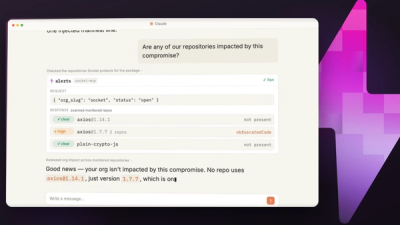
Socket MCP now lets AI assistants review org alerts, investigate threats using the Socket threat feed, and inspect package files in addition to dependency scoring.
Product
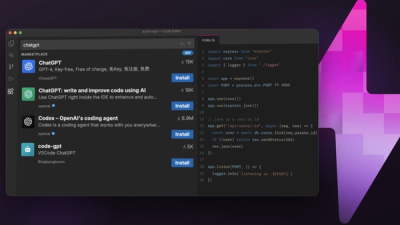
Socket Firewall blocks malicious VS Code and Open VSX extensions before install, protecting developers from compromised editor marketplaces.