
Product
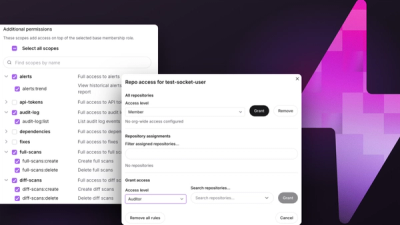
Introducing Repository Access Permissions and Custom Roles
Socket now supports Custom Roles and Repository Access Permissions so organizations can control who can access specific repositories and actions.
By Joe Werle - Jun 19, 2026
infra-foundry
Advanced tools
Production-ready cloud infrastructure components for modern applications, built with TypeScript and Pulumi.



A platform-agnostic cloud infrastructure components library for modern applications. Built with TypeScript and Pulumi, Infra Foundry provides reusable, composable infrastructure components that work across AWS, Cloudflare, and Vercel.
Create a new Pulumi project
mkdir my-infrastructure && cd my-infrastructure
pulumi new typescript
Install the package
yarn add infra-foundry
# or
npm install infra-foundry
Create a Pulumi Organisation via the Pulumi console
Create and select a stack in your organization
# stack-name refers to the environment to be deployed ex. `prod`, `dev`
pulumi stack init <your-org>/<stack-name>
Preview and deploy your infrastructure
pulumi preview --stack <your-org>/<stack-name>
pulumi up --stack <your-org>/<stack-name>
Each component is exported under its own namespace, so you import only what you need:
import { s3, vpc, rds } from 'infra-foundry'
| Component | Provider | What it does |
|---|---|---|
| Amplify | AWS | Static site hosting and CI/CD from a Git repo |
| App Runner | AWS | Fully managed container service with autoscaling |
| ECR | AWS | Container registry with image lifecycle management |
| ECS | AWS | Fargate cluster and service orchestration |
| Docker Image | Docker | Build and push images to a registry |
| Identity Center | AWS | SSO admin, permission sets, and team membership |
| Organizations | AWS | Organizational units under the org root |
| RDS | AWS | Managed relational database instances |
| Route 53 | AWS | Hosted zones and DNS records |
| S3 | AWS | Object storage fronted by a CloudFront CDN |
| Secrets Manager | AWS | Versioned secret storage |
| SES | AWS | Email sending with DKIM and Route 53 wiring |
| SQS | AWS | Standard and FIFO queues with optional DLQ |
| VPC | AWS | Virtual private cloud networking |
| Cloudflare | Cloudflare | Nameserver delegation and DNS records |
| Vercel | Vercel | Project provisioning with env vars and domains |
Provision an AWS Amplify app wired to a Git repository, with a managed branch and optional custom domain.
import { amplify } from 'infra-foundry'

const site = new amplify.AmplifyApp({
  name: 'marketing-site',
  repository: 'https://github.com/acme/marketing-site',
  branchName: 'main',
  githubAccessToken: process.env.GITHUB_TOKEN!,
  domainName: 'acme.com', // optional
})
Run a container image on AWS App Runner with health checks, autoscaling, and an optional custom domain.
import { appRunner } from 'infra-foundry'

const api = new appRunner.AppRunnerService({
  name: 'api',
  image: '123456789012.dkr.ecr.us-east-1.amazonaws.com/api:latest',
  port: '8080',
  healthCheckPath: '/health',
})

export const url = api.serviceUrl
Create an Elastic Container Registry repository with automatic image lifecycle pruning, plus helpers to resolve image URIs.
import { ecr } from 'infra-foundry'

const repo = new ecr.EcrRepository({ name: 'api', maxImages: 5 })

export const imageUri = repo.getLatestImageUri()
Stand up a Fargate cluster and a load-balanced service. The service is created against a cluster and VPC.
import { ecs, vpc } from 'infra-foundry'

const network = new vpc.Vpc('prod')
const cluster = new ecs.EcsCluster('prod')

const service = new ecs.EcsService(
  'api',
  cluster,
  {
    name: 'api',
    image: 'nginx:latest',
    port: 80,
    dnsConfig: {
      /* domain + hosted zone config */
    },
    healthCheckConfig: {
      /* path, interval, thresholds */
    },
  },
  {
    /* VPC config: subnets, security groups */
  },
)
Build a Docker image from a local context and push it to a registry (for example, the ECR repository above).
import { image, ecr } from 'infra-foundry'

const repo = new ecr.EcrRepository({ name: 'api' })

const img = new image.DockerImage({
  name: 'api',
  imageName: repo.repository.repositoryUrl,
  buildContext: './app',
  registry: {
    /* { server, username, password } — e.g. from ECR auth */
  },
})
Manage AWS IAM Identity Center (SSO): bootstrap an admin user, define permission sets, and assign team members to accounts.
import { identityCenter } from 'infra-foundry'

const admin = new identityCenter.IdentityCenterAdmin('admin', {
  adminUsername: 'jane',
  adminGivenName: 'Jane',
  adminFamilyName: 'Doe',
  adminEmail: 'jane@acme.com',
  awsRegion: 'us-east-1',
})
Create organizational units under the AWS Organizations root.
import { organizations } from 'infra-foundry'

const ous = new organizations.OrganizationalUnits('root', {
  ouNames: ['Workloads', 'Sandbox'],
})
Provision a managed relational database instance with sensible storage defaults.
import { rds } from 'infra-foundry'

const db = new rds.RdsInstance({
  name: 'app',
  engine: 'postgres',
  engineVersion: '16.3',
  dbName: 'app',
  username: 'app',
  password: dbPassword, // pulumi.Output<string> or string
})
Create (or find) a Route 53 hosted zone and manage records for it.
import { route53 } from 'infra-foundry'

const zone = new route53.HostedZone('acme', { name: 'acme.com' })
Create an S3 bucket fronted by a CloudFront distribution for serving static assets.
import { s3 } from 'infra-foundry'

const assets = new s3.S3Bucket({ name: 'acme-assets' })

export const cdnDomain = assets.assetsCdn.domainName
Store a versioned secret with one or more key/value pairs in AWS Secrets Manager.
import { secret } from 'infra-foundry'

const creds = new secret.Secret({
  name: 'app/db',
  values: {
    username: 'app',
    password: dbPassword,
  },
})
Set up an SES domain identity with DKIM. Use SesWithRoute53 to also create the verification and DKIM records in a hosted zone automatically.
import { ses } from 'infra-foundry'

const email = new ses.Ses('acme', {
  name: 'acme',
  domainName: 'acme.com',
  enableDkim: true,
})
Create a standard or FIFO queue, optionally with a dead-letter queue and KMS encryption.
import { sqs } from 'infra-foundry'

const queue = new sqs.SqsQueue({
  name: 'jobs',
  type: 'fifo',
})

export const queueUrl = queue.url
Provision a VPC with networking primitives ready for ECS and other workloads.
import { vpc } from 'infra-foundry'

const network = new vpc.Vpc('prod')
Delegate a domain to Cloudflare nameservers and manage its DNS records.
import { cloudflare } from 'infra-foundry'

const ns = new cloudflare.CloudflareNameserver('acme', {
  domain: 'acme.com',
  nameServers: zone.nameServers,
})
Provision a Vercel project with a framework preset, Git repository, and environment variables.
import { vercel } from 'infra-foundry'

const app = new vercel.VercelProject('web', {
  name: 'web',
  framework: 'nextjs',
  gitRepo: 'acme/web',
})
src/
├── amplify/           # AWS Amplify components
├── app-runner/        # AWS App Runner components
├── cloudflare/        # Cloudflare components
├── ecr/               # AWS ECR components
├── ecs/               # AWS ECS Fargate components
├── identity-center/   # AWS IAM Identity Center (SSO) components
├── image/             # Docker image components
├── organizations/     # AWS Organizations components
├── rds/               # AWS RDS components
├── route53/           # AWS Route 53 components
├── s3/                # AWS S3 components
├── secret/            # AWS Secrets Manager components
├── ses/               # AWS SES components
├── sqs/               # AWS SQS components
├── vercel/            # Vercel components
├── vpc/               # AWS VPC components
└── utils/             # Shared utilities
We welcome contributions! Please see our Contributing Guidelines for details.
This project is licensed under the MIT License - see the LICENSE file for details.
Built with ❤️ by Hamza Hassan
FAQs
Production-ready cloud infrastructure components for modern applications, built with TypeScript and Pulumi.
We found that infra-foundry demonstrated a healthy version release cadence and project activity because the last version was released less than a year ago. It has 1 open source maintainer collaborating on the project.
Did you know?

Socket for GitHub automatically highlights issues in each pull request and monitors the health of all your open source dependencies. Discover the contents of your packages and block harmful activity before you install or update your dependencies.
Product
Socket now supports Custom Roles and Repository Access Permissions so organizations can control who can access specific repositories and actions.
Product
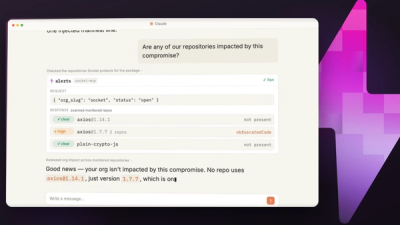
Socket MCP now lets AI assistants review org alerts, investigate threats using the Socket threat feed, and inspect package files in addition to dependency scoring.
Product
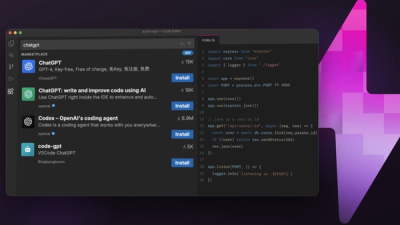
Socket Firewall blocks malicious VS Code and Open VSX extensions before install, protecting developers from compromised editor marketplaces.