
Product
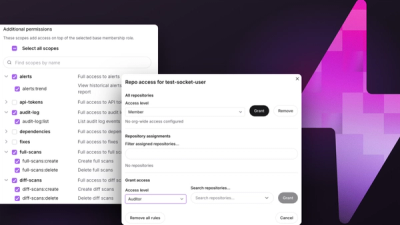
Introducing Repository Access Permissions and Custom Roles
Socket now supports Custom Roles and Repository Access Permissions so organizations can control who can access specific repositories and actions.
By Joe Werle - Jun 19, 2026
pg-agent-memory
Advanced tools
Stateful AI agent memory layer for PostgreSQL with pgvector - TypeScript-first with intelligent context management
Stateful AI agent memory layer for PostgreSQL with pgvector. TypeScript-first with intelligent context management and semantic search.






❌ Without pg-agent-memory
// Day 1: User shares preference
await openai.chat.completions.create({
messages: [{ role: 'user', content: 'I prefer Python' }],
});
// AI: "Got it! I'll remember that."
// Day 2: User asks for help
await openai.chat.completions.create({
messages: [{ role: 'user', content: 'Help me start a project' }],
});
// AI: "What language would you like to use?"
// 😤 Forgot everything!
✅ With pg-agent-memory
// Day 1: Store preference
await memory.remember({
  conversation: userId,
  content: 'User prefers Python',
  role: 'system',
});

// Day 2: Retrieve context
const context = await memory.getHistory(userId);
await openai.chat.completions.create({
  messages: [...context, { role: 'user', content: 'Help me start a project' }],
});
// AI: "I'll create a Python project for you!"
// 🎯 Remembers everything!
# Install
npm install pg-agent-memory

# Start PostgreSQL with Docker (includes pgvector)
docker compose up -d

# Run example
npm start
npm install pg-agent-memory
Option 1: Docker (Recommended)
# Use included docker compose configuration
docker compose up -d
Option 2: Existing PostgreSQL
-- Enable pgvector extension
CREATE EXTENSION IF NOT EXISTS vector;
import { AgentMemory } from 'pg-agent-memory';

// Option 1: Static factory method (recommended)
const memory = await AgentMemory.create({
  agent: 'my-assistant',
  connectionString: 'postgresql://user:pass@localhost:5432/db',
});

// Option 2: Traditional constructor + initialize
const memory = new AgentMemory({
  agent: 'my-assistant',
  connectionString: 'postgresql://user:pass@localhost:5432/db',
});
await memory.initialize();

// Store conversation memory
const memoryId = await memory.remember({
  conversation: 'user-123',
  content: 'User prefers email notifications',
  role: 'user',
  importance: 0.8,
  timestamp: new Date(),
});

// Find related memories using vector similarity
const related = await memory.findRelatedMemories(memoryId, 5);

// Semantic search across memories
const relevant = await memory.searchMemories('notification preferences');

// Get relevant context for a query
const context = await memory.getRelevantContext(
  'user-123',
  'user communication preferences',
  1000 // max tokens
);

console.log(`Found ${context.messages.length} relevant memories`);
console.log(`Relevance score: ${context.relevanceScore}`);

// Health check for monitoring
const health = await memory.healthCheck();
console.log(`Status: ${health.status}, Memories: ${health.details.memoryCount}`);

// Cleanup
await memory.disconnect();
Configure multiple AI providers with accurate token counting and prompt caching:
const memory = new AgentMemory({
  agent: 'multi-model-bot',
  connectionString,
  modelProviders: [
    {
      name: 'gpt-4o',
      provider: 'openai',
      model: 'gpt-4o',
      tokenLimits: { context: 128000, output: 4000 },
      // High context limit: Supports large conversations
    },
    {
      name: 'claude-sonnet',
      provider: 'anthropic',
      model: 'claude-sonnet-4-20250514',
      tokenLimits: { context: 200000, output: 4000 },
      // Large context window: Perfect for long conversations
    },
    {
      name: 'deepseek-coder',
      provider: 'deepseek',
      model: 'deepseek-coder',
      tokenLimits: { context: 32000, output: 4000 },
      // Cost-effective option for coding tasks
    },
    {
      name: 'gemini-pro',
      provider: 'google',
      model: 'gemini-1.5-pro',
      tokenLimits: { context: 1048576, output: 8192 },
      // Massive context window: Handle very long conversations
    },
    {
      name: 'llama-3',
      provider: 'meta',
      model: 'llama-3.1-70b',
      tokenLimits: { context: 128000, output: 4000 },
      // More efficient tokenizer: ~44% fewer tokens than OpenAI
    },
  ],
  defaultProvider: 'gpt-4o',
  tokenCountingStrategy: 'hybrid', // 'precise', 'fast', or 'hybrid'
});

// Token counting uses official provider documentation:
// - OpenAI: ~4 chars/token or 0.75 words/token (official baseline)
// - Anthropic: ~3.5 chars/token (14% more tokens)
// - DeepSeek: ~3.3 chars/token (20% more tokens)
// - Google: ~4 chars/token (same as OpenAI)
// - Meta/Llama: ~0.75 tokens/word (44% fewer tokens - more efficient)
await memory.remember({
  conversation: userId,
  content: longText,
  provider: 'gpt-4o', // Use OpenAI for this memory
});
Automatic memory compression with multiple strategies:
// Enable compression for large conversations
const compressionResult = await memory.compressMemories({
  strategy: 'hybrid', // 'token_based', 'time_based', 'importance_based', 'hybrid'
  maxAge: '7d',
  targetCompressionRatio: 0.6,
});

console.log(`Compressed ${compressionResult.memoriesCompressed} memories`);
console.log(`Token savings: ${compressionResult.tokensSaved}`);

// Get context with automatic compression
const context = await memory.getRelevantContextWithCompression(
  'coding preferences',
  4000 // Automatically compresses if needed
);
import OpenAI from 'openai';
import { AgentMemory } from 'pg-agent-memory';

const client = new OpenAI({
  apiKey: process.env.OPENAI_API_KEY,
});

const memory = new AgentMemory({ agent: 'support-bot', connectionString });

// Retrieve conversation history
const history = await memory.getHistory(userId);

// Include memory in AI request
const completion = await client.chat.completions.create({
  model: 'gpt-4o',
  messages: [
    ...history.map(m => ({ role: m.role, content: m.content })),
    { role: 'user', content: userMessage },
  ],
});

// Store the interaction
await memory.remember({
  conversation: userId,
  content: userMessage,
  role: 'user',
  importance: 0.5,
  timestamp: new Date(),
});

await memory.remember({
  conversation: userId,
  content: completion.choices[0].message.content,
  role: 'assistant',
  importance: 0.7,
  timestamp: new Date(),
});
import Anthropic from '@anthropic-ai/sdk';
import { AgentMemory } from 'pg-agent-memory';

const client = new Anthropic({
  apiKey: process.env.ANTHROPIC_API_KEY,
});

const memory = new AgentMemory({
  agent: 'claude-assistant',
  connectionString,
  modelProviders: [
    {
      name: 'claude',
      provider: 'anthropic',
      model: 'claude-sonnet-4-20250514',
      tokenLimits: { context: 200000, output: 4000 },
    },
  ],
});

// Get conversation with compression for large contexts
const context = await memory.getRelevantContextWithCompression(
  'user preferences and history',
  180000 // Near Claude's context limit
);

const message = await client.messages.create({
  model: 'claude-sonnet-4-20250514',
  max_tokens: 1024,
  messages: [
    ...context.messages.map(m => ({ role: m.role, content: m.content })),
    { role: 'user', content: userMessage },
  ],
});

// Store the interaction
await memory.remember({
  conversation: userId,
  content: message.content[0].text,
  role: 'assistant',
  importance: 0.7,
  timestamp: new Date(),
});
import { streamText } from 'ai';
import { openai } from '@ai-sdk/openai';
import { AgentMemory } from 'pg-agent-memory';

const memory = new AgentMemory({ agent: 'chat-assistant', connectionString });

export async function POST(req: Request) {
  const { messages, userId } = await req.json();

  // Get user's conversation history
  const history = await memory.getHistory(userId);

  const result = streamText({
    model: openai('gpt-4o'),
    system: 'You are a helpful assistant with memory.',
    messages: [...history, ...messages],
  });

  // Store the conversation
  for (const message of messages) {
    await memory.remember({
      conversation: userId,
      role: message.role,
      content: message.content,
      importance: 0.5,
      timestamp: new Date(),
    });
  }

  return result.toDataStreamResponse();
}
AgentMemory.create(config: MemoryConfig): Promise<AgentMemory>Recommended: Creates and initializes an AgentMemory instance in one call.
const memory = await AgentMemory.create({
  agent: 'my-bot',
  connectionString: 'postgresql://...',
});
new AgentMemory(config: MemoryConfig)
MemoryConfig:
agent: string - Unique agent identifierconnectionString: string - PostgreSQL connection stringtablePrefix?: string - Table prefix (default: 'agent')maxTokens?: number - Max tokens per memory (default: 4000)embeddingDimensions?: number - Vector dimensions (default: 384)initialize(): Promise<void>Initialize database schema and embedding model.
remember(message: Message): Promise<string>Store a conversation memory.
findRelatedMemories(memoryId: string, limit?: number): Promise<Message[]>Find memories related to a specific memory using vector similarity.
const related = await memory.findRelatedMemories(memoryId, 5);
healthCheck(): Promise<HealthStatus>Check system health for monitoring and debugging.
const health = await memory.healthCheck();
// Returns: { status: 'healthy' | 'unhealthy', details: {...} }
Message:
{
  conversation: string;    // Conversation ID
  content: string;         // Memory content
  role: 'user' | 'assistant' | 'system'; // Required, defaults to 'user'
  importance: number;      // 0-1 relevance score, defaults to 0.5
  timestamp: Date;         // Required, defaults to new Date()
  id?: string;             // Optional memory ID
  metadata?: Record<string, unknown>;
  embedding?: number[];    // Optional vector embedding
  expires?: Date | string; // Expiration (e.g., '30d', '1h')
}
recall(filter: MemoryFilter): Promise<Context>Retrieve memories with filtering.
getHistory(conversation: string, limit?: number): Promise<Message[]>Get chronological conversation history.
getRelevantContext(conversation: string, query: string, maxTokens: number): Promise<Context>Find semantically relevant memories for a query.
searchMemories(query: string, filters?: MemoryFilter): Promise<Message[]>Semantic search across all agent memories.
deleteMemory(memoryId: string): Promise<void>Delete specific memory.
deleteConversation(conversation: string): Promise<void>Delete entire conversation.
┌─────────────────┐    ┌──────────────────┐    ┌─────────────────┐
│   AgentMemory   │────│  EmbeddingService │────│ @xenova/trans.. │
│                 │    │                  │    │   (Local Model) │
└─────────────────┘    └──────────────────┘    └─────────────────┘
         │
         ▼
┌─────────────────┐    ┌──────────────────┐
│   PostgreSQL    │────│     pgvector     │
│   (Memories)    │    │  (Vector Search) │
└─────────────────┘    └──────────────────┘
Components:
import { AgentMemory } from 'pg-agent-memory';

class ChatBot {
  private memory: AgentMemory;

  constructor() {
    this.memory = new AgentMemory({
      agent: 'chatbot',
      connectionString: process.env.DATABASE_URL,
    });
  }

  async processMessage(userId: string, message: string) {
    // Store user message
    await this.memory.remember({
      conversation: userId,
      content: message,
      role: 'user',
      importance: 0.5,
      timestamp: new Date(),
    });

    // Get relevant context
    const context = await this.memory.getRelevantContext(userId, message, 800);

    // Generate response using context
    const response = await this.generateResponse(message, context);

    // Store bot response
    await this.memory.remember({
      conversation: userId,
      content: response,
      role: 'assistant',
      importance: 0.7,
      timestamp: new Date(),
    });

    return response;
  }
}
// Search with filters
const memories = await memory.searchMemories('user preferences', {
  importance: { min: 0.7 },
  dateRange: {
    start: new Date('2024-01-01'),
    end: new Date('2024-12-31'),
  },
  metadata: { category: 'user_settings' },
  limit: 10,
});

// Get memories by role
const userMessages = await memory.recall({
  conversation: 'user-123',
  role: 'user',
  limit: 50,
});
# Set database URL
export DATABASE_URL="postgresql://user:pass@localhost:5432/dbname"

# Run basic example
npm run example:basic

# Run chatbot example
npm run example:chatbot

# Run all examples
npm run example:all
# Clone repository
git clone <repository>
cd pg-agent-memory
npm install

# Start PostgreSQL with pgvector
npm run dev:up

# Copy environment variables
cp .env.example .env

# Run examples
npm run example:basic

# Run tests
npm run test:docker
# Start development database
npm run dev:up

# Stop database (data persists)
npm run dev:down

# View database logs
npm run dev:logs

# Clean everything (including data)
npm run dev:clean

# Connect to PostgreSQL shell
bash scripts/docker-dev.sh shell
If you prefer using your own PostgreSQL:
# Install pgvector extension
CREATE EXTENSION IF NOT EXISTS vector;

# Set connection string
export DATABASE_URL="postgresql://user:pass@localhost:5432/dbname"

# Run tests
npm test
npm run test:integration
# Unit tests (no database needed)
npm test

# Integration tests with Docker
npm run test:docker

# Integration tests with custom database
export DATABASE_URL="postgresql://user:pass@localhost:5432/test_db"
npm run test:integration

# All tests
npm run test:all

# Code quality checks
npm run lint           # ESLint + Prettier
npm run type-check     # TypeScript compilation
npm run validate       # Full validation (lint + type-check + tests)

# Performance benchmarks
npm run benchmark      # Verify performance claims
MIT © Alex Potapenko
npm testFAQs
Stateful AI agent memory layer for PostgreSQL with pgvector - TypeScript-first with intelligent context management
The npm package pg-agent-memory receives a total of 15 weekly downloads. As such, pg-agent-memory popularity was classified as not popular.
We found that pg-agent-memory demonstrated a healthy version release cadence and project activity because the last version was released less than a year ago. It has 1 open source maintainer collaborating on the project.
Did you know?

Socket for GitHub automatically highlights issues in each pull request and monitors the health of all your open source dependencies. Discover the contents of your packages and block harmful activity before you install or update your dependencies.
Product
Socket now supports Custom Roles and Repository Access Permissions so organizations can control who can access specific repositories and actions.
Product
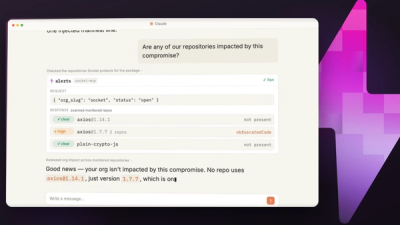
Socket MCP now lets AI assistants review org alerts, investigate threats using the Socket threat feed, and inspect package files in addition to dependency scoring.
Product
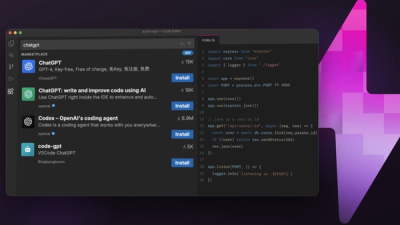
Socket Firewall blocks malicious VS Code and Open VSX extensions before install, protecting developers from compromised editor marketplaces.