
Product
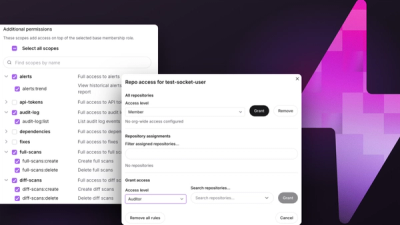
Introducing Repository Access Permissions and Custom Roles
Socket now supports Custom Roles and Repository Access Permissions so organizations can control who can access specific repositories and actions.
By Joe Werle - Jun 19, 2026
pi-continuous-learning
Advanced tools
A Pi extension that observes coding sessions and distills patterns into reusable instincts.

A Pi extension that watches your coding sessions and distils patterns into reusable instincts — atomic learned behaviours with confidence scoring, project scoping, and closed-loop feedback validation.


Inspired by everything-claude-code/continuous-learning-v2, reimplemented as a native Pi extension in TypeScript.
Pi is smart — but it starts every session with no memory of what worked yesterday. pi-continuous-learning fixes that.
The extension silently observes your sessions, identifies recurring patterns, and writes them as instincts: small, scoped rules stored on your machine. Before each agent turn, relevant instincts are injected into the system prompt so Pi already knows your conventions, preferred tools, and workflows — without you repeating yourself.
What makes this different from a static AGENTS.md file: instincts are earned through evidence. Confidence rises when an instinct proves useful, falls when it contradicts your actual behaviour, and decays passively when it goes stale. Instincts that consistently hold up graduate into permanent AGENTS.md guidelines or skills. Ones that don't get pruned automatically.
Session events → Observations → Analyzer → Instincts
                                              ↓
                              Injected into system prompt
                                              ↓
                              Outcome tracked → confidence updated
                                              ↓
                              Graduate to AGENTS.md / Skill / Command
pi install npm:pi-continuous-learning
This installs the extension globally and makes the pi-cl-analyze CLI available on your PATH.
| Requirement | Version |
|---|---|
| Pi | >= 0.62.0 |
| Node.js | >= 18 |
| LLM provider | configured in Pi (analyzer defaults to Anthropic Haiku; provider/model are configurable) |

Every hook event in your session — tool calls, prompts, errors, corrections, model switches — is appended to a per-project observations.jsonl file. Before writing, secrets (API keys, bearer tokens, AWS credentials) are automatically scrubbed. Low-signal events are dropped entirely, cutting context by ~80%.
The background analyzer (pi-cl-analyze) processes new observations using the configured provider/model (Anthropic Haiku by default). It applies three tiers of quality filtering:
| Tier | What it captures | How it's stored |
|---|---|---|
| 1 — Project conventions | Patterns specific to a codebase (e.g. "use Result<T,E> for errors") | Project-scoped instinct |
| 2 — Workflow patterns | Universal multi-step workflows | Global instinct |
| 3 — Generic agent behaviour | Read-before-edit, clarify-first | Skipped |
Generic "good agent hygiene" is deliberately filtered out — instincts should capture your patterns, not re-teach Pi things it already knows.
Before each agent turn, the injector loads instincts relevant to the current prompt (domain-matched, confidence >= 0.5), sorts by confidence, and appends them to the system prompt within a ~1,000 token budget:
## Learned Behaviours (Instincts)
- [0.75] when modifying code files: Always search with grep to find relevant context before editing
- [0.68] when debugging errors: Read stack traces to understand root cause before suggesting fixes

## Project Knowledge
- [0.80] The test database runs on port 3306
- [0.72] Use pnpm build:fast for incremental TypeScript compilation
Each injected instinct is tracked against the turn's outcome. Successful turns quietly boost confidence; errors and corrections reduce it. This closed loop means instincts are validated by real results, not just frequency.
Run /instinct-dream to trigger a full LLM-powered review of your entire instinct corpus. Unlike the incremental analyzer, dreaming looks across all your instincts at once to:
Dreaming is the right tool when your instinct list feels bloated, contradictory, or out of date. It can also run automatically: if dreaming_enabled is true and at least 7 days have passed since the last consolidation with 10+ new sessions, a dream pass is triggered at the start of the next analyzer run.
{
  "dreaming_enabled": true,
  "consolidation_interval_days": 7,
  "consolidation_min_sessions": 10
}
Instincts are designed to be temporary. Once one has proven itself (age >= 7 days, confidence >= 0.75, confirmed >= 3×, contradicted <= 1×), /instinct-graduate promotes it into permanent knowledge:
| Target | When | What happens |
|---|---|---|
| AGENTS.md | Single mature instinct | Appended as a permanent guideline |
| Skill | 3+ related instincts, same domain | Scaffolded into a SKILL.md |
| Command | 3+ workflow instincts | Scaffolded into a slash command spec |
After 28 days, ungraduated instincts face TTL enforcement: low-confidence ones are deleted, higher-confidence ones are halved and flagged for removal.
Confidence comes from two sources that work together:
Discovery (initial, from observation count):
| Observations | Confidence |
|---|---|
| 1–2 | 0.30 — tentative |
| 3–5 | 0.50 — moderate |
| 6–10 | 0.70 — strong |
| 11+ | 0.85 — very strong |
Feedback (ongoing, from real outcomes):
| Event | Change |
|---|---|
| Confirmed (behaviour aligned) | +0.05 (diminishing after 3–6 confirmations) |
| Contradicted (behaviour went against) | −0.15 |
| Inactive (instinct irrelevant) | no change |
| Passive decay | −0.05 per week |
Range: 0.1 min, 0.9 max. Below 0.1 = flagged for removal. Diminishing returns on confirmation prevent trivially-easy-to-confirm instincts from hitting the ceiling unfairly.
The analyzer tracks prompts that appear across three or more sessions. When a recurring prompt is detected, its observation batch gets a signal boost, making it a higher priority for pattern extraction. If you keep asking Pi the same kind of question, the system notices — and learns to handle it better proactively.
Before creating or updating instincts, a deterministic (no LLM cost) contradiction check runs across all existing instincts. It looks for similar triggers with opposing actions using verb pairs (avoid/use, never/always, skip/ensure) and negation patterns. Conflicts surface automatically — either in the /instinct-dream consolidation pass or during the analyzer's cleanup phase.
Every write is checked against existing instincts using Jaccard similarity. If any existing instinct scores >= 0.6 similarity, the write is blocked and the LLM is instructed to update the existing one instead. This keeps the corpus clean without human effort.
Alongside behavioural instincts, the extension maintains a second memory class: facts. A fact is a declarative statement with no trigger or action — just something that is true.
Instinct: when modifying API routes → always update the OpenAPI spec
Fact:     The staging environment lives at staging.example.com
Facts are user-driven — you create them by telling Pi to remember something during a session. Pi then calls the fact_write tool directly:
"Remember that the test database port is 3306" "Store the fact that we use pnpm build:fast for incremental TypeScript compilation"
Facts are injected into the system prompt as a separate ## Project Knowledge block after the instincts block. They participate in the same confidence and decay system as instincts — facts that aren't confirmed decay over time and are eventually pruned. The background analyzer handles this maintenance automatically; it does not try to detect or create facts from observations.
| Command | Description |
|---|---|
/instinct-status | Show all instincts grouped by domain with confidence scores, trend arrows (↑↓→), and feedback ratios |
/instinct-dream | Holistic consolidation: merge duplicates, resolve contradictions, remove stale entries |
/instinct-evolve | Incremental LLM-powered analysis: suggests merges, promotions, and cleanup |
/instinct-graduate | Promote mature instincts to AGENTS.md, skills, or commands |
/instinct-promote [id] | Manually promote a project instinct to global scope |
/instinct-export [--scope project|global] [--domain typescript] | Export instincts to JSON |
/instinct-import <path> | Import instincts from a JSON file |
/instinct-projects | List all tracked projects and their instinct counts |
The LLM can call these directly during conversation — no slash command needed:
| Tool | Description |
|---|---|
instinct_list | List instincts with optional scope/domain filters |
instinct_read | Read a specific instinct by ID |
instinct_write | Create or update an instinct |
instinct_delete | Remove an instinct by ID |
instinct_merge | Merge multiple instincts into one |
fact_list | List knowledge facts with optional scope/domain filters |
fact_read | Read a specific fact by ID |
fact_write | Create or update a knowledge fact |
fact_delete | Remove a fact by ID |
Ask Pi things like "show me my instincts", "merge these two", or "remember that the DB port is 3306" and it will use these tools directly.
The analyzer is a standalone CLI that processes all your projects in a single pass and creates/updates instincts using the configured provider/model. It runs outside of Pi sessions so it never causes lag or interference.
pi-cl-analyze
What it does per run:
~/.pi/continuous-learning/projects.jsonSafety features:
| Feature | Detail |
|---|---|
| Lockfile guard | Only one instance runs at a time; subsequent invocations exit immediately |
| Global timeout | Process exits after 5 minutes regardless of progress |
| Stale lock detection | Auto-cleaned after 10 minutes or if the owning process is gone |
Structured JSON logs are written to ~/.pi/continuous-learning/analyzer.log. Each run records timing, token usage, cost, instinct changes, skip reasons, and errors.
# View recent run summaries
cat ~/.pi/continuous-learning/analyzer.log | jq 'select(.event == "run_complete")'

# Check total cost over time
cat ~/.pi/continuous-learning/analyzer.log | jq 'select(.event == "run_complete") | .total_cost_usd'

# Per-project breakdown
cat ~/.pi/continuous-learning/analyzer.log | jq 'select(.event == "project_complete") | {project: .project_name, duration_s: (.duration_ms/1000), cost: .cost_usd}'
The log auto-rotates at 10 MB.
The recommended approach on macOS is launchd:
which pi-cl-analyze
cat > ~/Library/LaunchAgents/com.pi-continuous-learning.analyze.plist << EOF
<?xml version="1.0" encoding="UTF-8"?>
<!DOCTYPE plist PUBLIC "-//Apple//DTD PLIST 1.0//EN" "http://www.apple.com/DTDs/PropertyList-1.0.dtd">
<plist version="1.0">
<dict>
    <key>Label</key>
    <string>com.pi-continuous-learning.analyze</string>
    <key>ProgramArguments</key>
    <array>
        <string>$(which pi-cl-analyze)</string>
    </array>
    <key>StartInterval</key>
    <integer>300</integer>
    <key>StandardOutPath</key>
    <string>/tmp/pi-cl-analyze-stdout.log</string>
    <key>StandardErrorPath</key>
    <string>/tmp/pi-cl-analyze-stderr.log</string>
    <key>EnvironmentVariables</key>
    <dict>
        <key>PATH</key>
        <string>$(echo $PATH)</string>
    </dict>
</dict>
</plist>
EOF
Note:
$(which pi-cl-analyze)and$(echo $PATH)are evaluated when you run thecatcommand, so the plist contains the resolved absolute paths from your current shell.
launchctl load ~/Library/LaunchAgents/com.pi-continuous-learning.analyze.plist
launchctl list | grep pi-continuous-learning
tail -5 ~/.pi/continuous-learning/analyzer.log | jq .
# Disable (persists across reboots)
launchctl unload ~/Library/LaunchAgents/com.pi-continuous-learning.analyze.plist

# Re-enable
launchctl load ~/Library/LaunchAgents/com.pi-continuous-learning.analyze.plist

# Remove entirely
rm ~/Library/LaunchAgents/com.pi-continuous-learning.analyze.plist
crontab -e
# Add: runs every 5 minutes
*/5 * * * * pi-cl-analyze 2>> /tmp/pi-cl-analyze-stderr.log
Instincts are stored as Markdown files with YAML frontmatter under ~/.pi/continuous-learning/:
---
id: grep-before-edit
title: Grep Before Edit
trigger: "when modifying code files"
confidence: 0.7
domain: "workflow"
source: "personal"
scope: project
project_id: "a1b2c3d4e5f6"
project_name: "my-project"
observation_count: 8
confirmed_count: 5
contradicted_count: 1
inactive_count: 12
---
Always search with grep to find relevant context before editing files.
They're plain text — you can read, edit, or delete them directly. The extension will pick up changes on the next injection cycle.
All defaults work out of the box. Override at ~/.pi/continuous-learning/config.json:
{
  "run_interval_minutes": 5,
  "min_observations_to_analyze": 20,
  "min_confidence": 0.5,
  "max_instincts": 20,
  "max_injection_chars": 4000,
  "model": "claude-haiku-4-5",
  "provider": "anthropic",
  "timeout_seconds": 120,
  "active_hours_start": 8,
  "active_hours_end": 23,
  "max_idle_seconds": 1800,
  "dreaming_enabled": true,
  "consolidation_interval_days": 7,
  "consolidation_min_sessions": 10,
  "max_total_instincts_per_project": 100,
  "max_total_instincts_global": 200,
  "max_new_instincts_per_run": 10,
  "max_facts_per_project": 30,
  "max_facts_global": 50,
  "max_new_facts_per_run": 3
}
| Field | Default | Description |
|---|---|---|
run_interval_minutes | 5 | How often the analyzer runs (used for decay calculations) |
min_observations_to_analyze | 20 | Minimum observations before analysis triggers |
min_confidence | 0.5 | Instincts below this are not injected into prompts |
max_instincts | 20 | Maximum instincts injected per turn |
max_injection_chars | 4000 | Character budget for the injection block (~1,000 tokens) |
model | claude-haiku-4-5 | Model for the background analyzer |
provider | anthropic | Pi provider for the background analyzer model |
timeout_seconds | 120 | Per-project LLM session timeout |
active_hours_start | 8 | Hour (0–23) at which the active observation window starts |
active_hours_end | 23 | Hour (0–23) at which the active observation window ends |
max_idle_seconds | 1800 | Seconds of inactivity before a session is considered idle |
dreaming_enabled | true | Allow automatic consolidation passes |
consolidation_interval_days | 7 | Minimum days between automatic dream passes |
consolidation_min_sessions | 10 | Minimum new sessions before automatic dream triggers |
max_total_instincts_per_project | 100 | Hard cap; oldest low-confidence instincts are pruned first |
max_total_instincts_global | 200 | Hard cap for global instincts |
max_new_instincts_per_run | 10 | Rate limit on instinct creation per analyzer run |
max_facts_per_project | 30 | Hard cap on facts per project; lowest-confidence pruned first |
max_facts_global | 50 | Hard cap on global facts |
max_new_facts_per_run | 3 | Rate limit on fact creation per analyzer run |
log_path | ~/.pi/continuous-learning/analyzer.log | Analyzer log file path |
All data stays local on your machine:
~/.pi/continuous-learning/
  config.json                   # Optional overrides
  projects.json                 # Project registry
  analyze.lock                  # Present only while analyzer runs
  analyzer.log                  # Structured JSON event log
  instincts/personal/           # Global instincts
  facts/personal/               # Global facts
  projects/<hash>/
    project.json                # Project metadata + analysis cursor
    observations.jsonl          # Current observations
    observations.archive/       # Archived (auto-purged after 30 days)
    instincts/personal/         # Project-scoped instincts
    facts/personal/             # Project-scoped facts
../ attackspi install npm:pi-continuous-learning
Your observations, instincts, and configuration in ~/.pi/continuous-learning/ are preserved across updates. If you have a launchd schedule set up, no changes are needed.
npm install
npm test          # run tests
npm run check     # tests + lint + typecheck (mirrors CI)
npm run build     # compile to dist/
See CONTRIBUTING.md for full development guidelines.
Contributions are welcome! See CONTRIBUTING.md for development setup, commit conventions, and PR guidelines.
Please note that this project has a Code of Conduct. By participating you agree to abide by its terms.
MIT
FAQs
A Pi extension that observes coding sessions and distills patterns into reusable instincts.
The npm package pi-continuous-learning receives a total of 54 weekly downloads. As such, pi-continuous-learning popularity was classified as not popular.
We found that pi-continuous-learning demonstrated a healthy version release cadence and project activity because the last version was released less than a year ago. It has 1 open source maintainer collaborating on the project.
Did you know?

Socket for GitHub automatically highlights issues in each pull request and monitors the health of all your open source dependencies. Discover the contents of your packages and block harmful activity before you install or update your dependencies.
Product
Socket now supports Custom Roles and Repository Access Permissions so organizations can control who can access specific repositories and actions.
Product
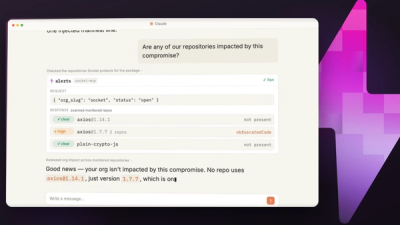
Socket MCP now lets AI assistants review org alerts, investigate threats using the Socket threat feed, and inspect package files in addition to dependency scoring.
Product
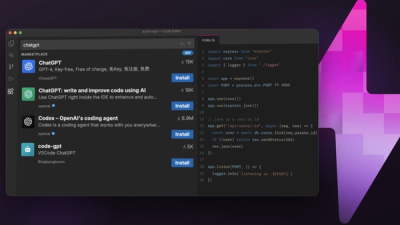
Socket Firewall blocks malicious VS Code and Open VSX extensions before install, protecting developers from compromised editor marketplaces.