
Product
Introducing Repository Access Permissions and Custom Roles
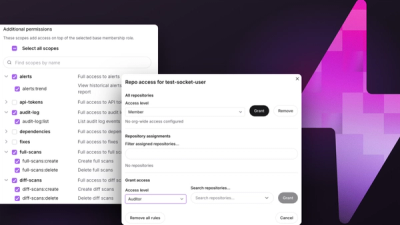
Socket now supports Custom Roles and Repository Access Permissions so organizations can control who can access specific repositories and actions.
By Joe Werle - Jun 19, 2026
plain-forge
Advanced tools

A toolkit for working with ***plain projects from inside your AI coding agent of choice — Claude Code, Codex, ForgeCode, OpenCode, and any other agent that reads from a standard skills directory. plain-forge ships skills, rules, and docs that turn a conversation into complete .plain spec files, then keeps maintaining them across the lifetime of the project. The specs are rendered into production-ready code by the codeplain renderer.
plain-forge is organized around four kinds of work, each with its own entry-point skill (and a long tail of supporting skills behind it).
Pick whichever entry point matches how much upfront design you want:
forge-plain — full end-to-end interview. One question at a time, immediate writes to disk, covers product → tech stack → testing → validation in four phases. Produces a complete .plain project with config.yaml, test scripts, and a successful codeplain --dry-run before handing off.init-plain-project — lightweight scaffold. Asks only about the base technology, project kind, and whether conformance testing is on; emits a template module, a stub top-level module, the testing scripts, and a config.yaml. No interview, no specs — pair it with add-feature to grow the project feature by feature.add-feature — takes a feature request in plain English and runs the same one-question-at-a-time loop that forge-plain uses, scoped to a single feature against an existing .plain file.add-functional-spec, add-functional-specs, add-implementation-requirement, add-test-requirement, add-concept, add-acceptance-test, add-resource, add-template. Each enforces the relevant ***plain syntax rules (concept uniqueness, complexity limits, line-length, linked-resource constraints, …) so hand-authoring doesn't drift from the language.create-import-module, create-requires-module, refactor-module, consolidate-concepts for restructuring as the project grows.plain-healthcheck — the verification gate. Inventories every .plain module, validates every config.yaml, and dry-runs every top module with the right config. Returns PASS / FAIL with a numbered punch-list when something is broken.init-config-file — assembles the canonical config.yaml per part of a project from the decisions made during interviewing.check-plain-env — probes the host machine for everything the project needs (language toolchains, external services, system binaries, drivers, codeplain itself) and emits a PASS / WARN / FAIL report with OS-specific install commands.analyze-func-specs / analyze-if-func-spec-too-complex / break-down-func-spec / resolve-spec-conflict — the spec-quality toolchain that runs behind add-feature and forge-plain but can also be invoked directly when reviewing or refactoring.debug-specs — when the rendered app misbehaves, this traces the generated code back to the spec that caused it and fixes the spec (never the generated code).run-codeplain — experimental supervised render. Launches codeplain for you, tails the log, watches generated code appear under plain_modules/, and detects pathologies (stuck conformance loops, complexity errors, missing concepts, render failures). On approval it stops the renderer, hands off to the right spec-edit skill, and resumes.implement-unit-testing-script / implement-conformance-testing-script / implement-prepare-environment-script — generate the per-language testing scripts that the renderer and you both invoke. New languages can be added by these skills without touching any other part of the project.Each skill operates on the same one-question-at-a-time, write-immediately, refine-through-follow-ups loop. Specs land on disk after every answer; later answers fix earlier writes in place. There is no batched interview, no "I'll gather context first," and no hand-authored functional specs — every new spec goes through the authoring skills so the complexity and conflict checks actually run.
plain-forge ships as a set of skills, rules, and docs that plug into your AI coding tool of choice. Install it once, then invoke forge-plain (or add-feature to add a feature to an existing ***plain project) from any project.
npx plain-forge install (recommended)The primary install path. Works for every supported runtime and is the only installer that ships all plain-forge content (skills, rules, and docs) — the other methods below are limited or agent-specific.
npx plain-forge install
This prompts you to pick an agent and a scope using an arrow-key menu. You can also pass both flags non-interactively:
npx plain-forge install --agent claude --scope project
Agent options:
--agent | Installs into | Use when |
|---|---|---|
claude | .claude/ | You use Claude Code |
codex | .codex/ | You use the OpenAI Codex CLI |
forgecode | .forgecode/ | You use ForgeCode |
universal | .agents/ | You want a runtime-neutral layout that any agent reading from .agents/ can pick up |
Scope options:
--scope | Installs into | Use when |
|---|---|---|
project | ./<agent-dir>/ in the current working directory | You want plain-forge in just this project |
global | ~/<agent-dir>/ in your home directory | You want plain-forge available in every project on the machine |
Each install writes three subfolders under the chosen directory:
<agent-dir>/
  skills/    # every plain-forge skill
  rules/     # spec-writing rules (loaded as workspace instructions)
  docs/      # shared reference docs
Re-running npx plain-forge install overwrites the destination silently, so it doubles as the upgrade path — npx plain-forge@latest install pulls the newest release every time.
These work but only install the skill files. Rules and docs do not travel with them, so use them only if you have a reason not to use npx plain-forge install.
npx skills CLInpx skills add Codeplain-ai/plain-forge --skill '*' --agent claude-code
Replace --agent claude-code with codex or opencode to target a different runtime, or repeat the flag for several at once.
Requires the Claude Code CLI. Inside a Claude Code session, run the following three commands one after the other:
/plugin marketplace add Codeplain-ai/plain-forge
/plugin install plain-forge@plain-forge
/reload-plugins
Without the reload the skills won't appear in the current session.
Requires the OpenAI Codex CLI. From your shell:
codex plugin marketplace add Codeplain-ai/plain-forge
Then, inside Codex, open the plugin directory, pick the plain-forge marketplace, and install the plugin from there. (Codex's CLI does not currently expose a codex plugin install equivalent.)
forge-plain to launch the structured QA workflow..plain files for you as you go through the four phases.If you'd rather skip the full upfront interview and build the specs feature-by-feature, use this lighter loop:
init-plain-project. It asks just for the base technology, the project kind, and whether conformance testing is enabled, then scaffolds the project skeleton: template/base.plain with the base ***implementation reqs*** and ***test reqs***, a stub top-level <project>.plain (frontmatter only — no functional specs, no concepts), the unit-test script, an optional conformance-test script, an optional prepare-environment script, and a config.yaml wired to whichever scripts were generated. No codeplain --dry-run is run.add-feature for you and run its one-question-at-a-time loop until the feature is on disk.add-feature manually whenever you want to drive the loop yourself.plain-healthcheck is run as the final automated step of every add-feature pass.add-feature..plain file(s).Once your .plain files are ready (and plain-healthcheck is green), render the specs into code with the Codeplain renderer:
codeplain <module>.plain
plain-forge prints the exact command (with the right final module name) at the end of Phase 4.
If you'd rather have plain-forge babysit the run from your AI coding agent, invoke run-codeplain. It launches the renderer for you, tails codeplain.log, watches generated code appear under plain_modules/, and surfaces what's happening in plain English. If it detects a pathology (stuck conformance loop, complexity error, missing concept, render failure), it asks for approval to stop the renderer, hands off to the right spec-edit skill (debug-specs, resolve-spec-conflict, break-down-func-spec, …), and resumes the render from the last completed functionality via --render-from.
This is an experimental feature — the default and most reliable way to render is still the manual codeplain <module>.plain invocation above.
Hit a bug in the rendered app, a failing test, or behavior that doesn't match what you specified?
debug-specs. plain-forge reads the generated code in plain_modules/ (and the failing tests, if any), traces the issue back to the responsible .plain spec, and diagnoses the root cause — ambiguous spec, missing spec, conflicting specs, incorrect spec, or a missing implementation req..plain file(s) only and summarizes what changed.Important: Never edit generated code under
plain_modules/orconformance_tests/directly — your changes will be overwritten on the next render. Always fix the spec and re-render.
plain-forge keeps a single canonical source of truth under forge/ and uses tiny per-runtime adapters to regenerate the directory layout each AI tool expects. The generated outputs are committed so existing install commands keep working — no build step is needed for end users.
forge/                       # canonical, runtime-neutral content
  skills/                    # all skills used during spec writing
  rules/                     # workspace rules for spec validation

runtimes/                    # per-runtime adapters
  claude/
    build.ts                 # generates .claude/ + .claude-plugin/ from forge/
    templates/               # Claude-specific files: settings.json, hook script, plugin manifests
  codex/
    build.ts                 # generates .codex-plugin/ and .agents/plugins/ (manifest points at forge/skills/)
    templates/               # Codex-specific files: plugin.json, marketplace catalog
  opencode/
    build.ts                 # generates .opencode/ from forge/
    templates/               # OpenCode-specific files: package.json, .gitignore

bin/
  forge-build.ts             # orchestrator: runs every runtimes/*/build.ts
  lib.ts                     # shared symlink/copy helpers

# Generated outputs (committed, do not edit by hand):
.claude/                     # Claude Code plugin layout
.claude-plugin/              # Claude Code plugin manifests
.codex-plugin/               # Codex plugin manifest (its "skills" field points at forge/skills/)
.agents/plugins/             # Codex marketplace catalog
.opencode/                   # OpenCode plugin layout
After editing anything under forge/ or runtimes/*/templates/, regenerate the runtime outputs:
npm install        # required after every fresh clone (node_modules/ is gitignored)
npm run build      # regenerate runtime outputs for Claude, Codex, OpenCode
npm run clean      # remove generated outputs and rebuild from scratch
If npm run build errors with sh: tsx: command not found, it means node_modules/ is missing — run npm install first.
The build is idempotent — re-running it produces no git diff.
| Skill | Description |
|---|---|
forge-plain | End-to-end QA interview that produces complete .plain spec files for a new project |
init-plain-project | Lightweight project initializer — scaffolds template/base.plain (base impl + test reqs), a stub top-level module, the testing scripts, and config.yaml. No functional specs, no concepts, no dry-run. Pair with add-feature to grow the project feature-by-feature. |
add-feature | Interview the user about a single feature, then write all the specs for it |
run-codeplain | Experimental. Launch a codeplain render and supervise it end-to-end — tails codeplain.log, watches generated code appear, detects pathologies (stuck conformance loops, complexity errors, missing concepts, render failures), and on approval stops the renderer, hands off to the right spec-edit skill, and resumes with --render-from. The default render path is still the manual codeplain <module>.plain command. |
| Skill | Description |
|---|---|
add-functional-spec | Add a single feature spec to ***functional specs*** |
add-functional-specs | Add multiple feature specs to ***functional specs*** in one pass (same per-spec checks as add-functional-spec) |
add-implementation-requirement | Add a non-functional requirement to ***implementation reqs*** |
add-test-requirement | Add a testing requirement to ***test reqs*** |
add-concept | Define a new concept in ***definitions*** |
add-acceptance-test | Add verification criteria under a functional spec |
add-resource | Link an external file (schema, API spec) to a spec |
add-template | Create or include a reusable Liquid template |
| Skill | Description |
|---|---|
create-import-module | Create a shared template module (definitions + reqs, no functional specs) |
create-requires-module | Create a module that depends on a previously built module |
refactor-module | Split a large module into smaller modules connected via a requires chain |
consolidate-concepts | Gather scattered concept definitions into a single shared import module |
| Skill | Description |
|---|---|
init-config-file | Build / finalize the project's config.yaml file(s) from the decisions made in Phase 3. Knows the full set of valid keys derived from the codeplain CLI, refuses to write secrets or per-invocation flags, and produces one config per part of the project. Run at the end of forge-plain (just before plain-healthcheck) and any time the testing surface changes. |
plain-healthcheck | Verification gate: validates every config.yaml, confirms each *-script field points at a real file in test_scripts/, and dry-runs every top module. Run whenever anything in the project is finalized — at the end of forge-plain, at the end of add-feature, after debug-specs, and after any single-skill edit that touches the renderable surface. |
check-plain-env | Read the project's .plain files, test_scripts/, config.yaml(s), and resources/, then probe the host for every requirement the package manager can't install: language toolchains (python + pip, node + npm, JDK + mvn, Go, Rust, .NET, etc.), external services (Postgres, Redis, Docker, ...), system binaries that language packages wrap (ffmpeg, tesseract, pdftoppm, browser binaries, ...), hardware / drivers / accelerators (NVIDIA driver → CUDA toolkit → cuDNN → framework-sees-GPU chain), codeplain itself, and credential env vars. Does not probe individual language packages — pip install -r requirements.txt (and equivalents) handle those when the test scripts run. Emits a PASS / WARN / FAIL report with OS-specific install commands for any gaps. Read-only — never installs anything. Run on first-time setup, before rendering on a new machine, after adding a new tech to a project, or any time command not found shows up in test output. |
analyze-if-func-spec-too-complex | Check if a spec exceeds the 200-line complexity limit |
analyze-func-specs | Check a batch of specs (2+) against each other in one call and return every conflicting pair |
analyze-2-func-specs | Legacy: check exactly two specs for conflicts (prefer analyze-func-specs) |
break-down-func-spec | Split an overly complex spec into smaller specs (each ≤ 200 LOC) |
resolve-spec-conflict | Resolve a conflict between two functional specs |
| Skill | Description |
|---|---|
debug-specs | Investigate a bug by tracing generated code back to specs and fixing only the .plain files |
implement-unit-testing-script | Generate a per-language unit-test runner (run_unittests_<lang>.sh / .ps1) |
implement-conformance-testing-script | Generate a per-language conformance-test runner; picks the install-inline or activate-only variant based on whether prepare_environment_<lang> exists |
implement-prepare-environment-script | Generate a per-language one-time setup script (prepare_environment_<lang>.sh / .ps1) that stages the build and pre-warms dependencies so conformance tests start cold; reconciles any existing conformance script to remove its now-redundant install step |
FAQs
Conversational spec-writing tool for ***plain specification language
The npm package plain-forge receives a total of 199 weekly downloads. As such, plain-forge popularity was classified as not popular.
We found that plain-forge demonstrated a healthy version release cadence and project activity because the last version was released less than a year ago. It has 1 open source maintainer collaborating on the project.
Did you know?

Socket for GitHub automatically highlights issues in each pull request and monitors the health of all your open source dependencies. Discover the contents of your packages and block harmful activity before you install or update your dependencies.
Product
Socket now supports Custom Roles and Repository Access Permissions so organizations can control who can access specific repositories and actions.
Product
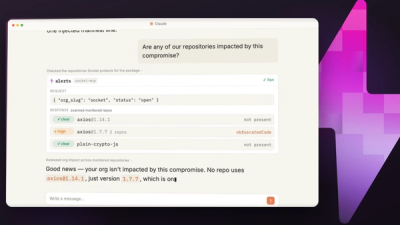
Socket MCP now lets AI assistants review org alerts, investigate threats using the Socket threat feed, and inspect package files in addition to dependency scoring.
Product
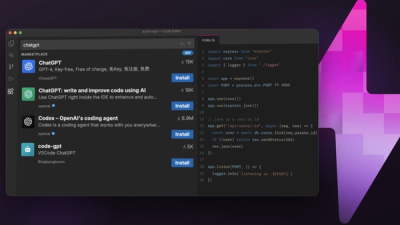
Socket Firewall blocks malicious VS Code and Open VSX extensions before install, protecting developers from compromised editor marketplaces.