

Product
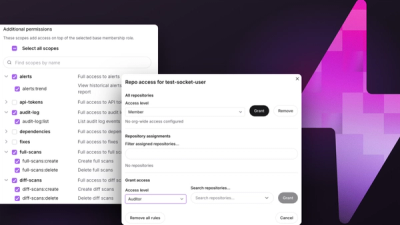
Introducing Repository Access Permissions and Custom Roles
Socket now supports Custom Roles and Repository Access Permissions so organizations can control who can access specific repositories and actions.
By Joe Werle - Jun 19, 2026
postcss-selector-parser
Advanced tools
Selector parser with built in methods for working with selector strings.



Selector parser with built in methods for working with selector strings.
With npm do:
npm install postcss-selector-parser
const parser = require('postcss-selector-parser');
const transform = selectors => {
    selectors.walk(selector => {
        // do something with the selector
        console.log(String(selector))
    });
};

const transformed = parser(transform).processSync('h1, h2, h3');
To normalize selector whitespace:
const parser = require('postcss-selector-parser');
const normalized = parser().processSync('h1, h2, h3', {lossless: false});
// -> h1,h2,h3
Async support is provided through parser.process and will resolve a Promise
with the resulting selector string.
Please see API.md.
The parser walks the selector AST recursively, both when parsing and when
serializing it back to a string (.toString()). In versions up to and
including 7.1.1, a selector with extreme nesting — for example thousands of
nested :not(...) — could recurse deeply enough to overflow the call stack and
throw RangeError: Maximum call stack size exceeded, a potential
denial-of-service when processing untrusted CSS.
This is now bounded by a maximum nesting depth (default: 256). Beyond that
depth, parsing and serialization throw a regular, catchable Error at a
predictable point instead of relying on the runtime hitting its stack limit.
The default is far above any realistic selector, so it does not affect normal
use.
Practical impact is low. The only attacker-controlled input is the selector
string itself, which is now capped by the default limit. The limit is
adjustable through the maxNestingDepth option, but that option is trusted
configuration provided by the integrating code — it is never derived from the
parsed CSS, so a malicious selector cannot change it:
// Tighten the limit when parsing untrusted input:
parser().processSync(untrustedSelector, {maxNestingDepth: 128});
Raising maxNestingDepth to a very large value is an explicit, informed choice
and can reintroduce the stack-overflow risk in environments with a small call
stack (e.g. browser workers). The default is recommended unless you have a
specific need.
MIT
css-what is a CSS selector parser that can parse selectors into an understandable format but does not offer the same level of manipulation and transformation capabilities as postcss-selector-parser.
css-selector-tokenizer can tokenize and parse CSS selectors. It provides a different API and approach compared to postcss-selector-parser, focusing more on the tokenization aspect rather than direct manipulation.
scss-parser is designed to parse SCSS syntax. While it can handle selectors within the SCSS syntax, its primary focus is broader than just selectors, making it less specialized compared to postcss-selector-parser.
FAQs
Selector parser with built in methods for working with selector strings.
The npm package postcss-selector-parser receives a total of 127,445,209 weekly downloads. As such, postcss-selector-parser popularity was classified as popular.
We found that postcss-selector-parser demonstrated a healthy version release cadence and project activity because the last version was released less than a year ago. It has 5 open source maintainers collaborating on the project.
Did you know?

Socket for GitHub automatically highlights issues in each pull request and monitors the health of all your open source dependencies. Discover the contents of your packages and block harmful activity before you install or update your dependencies.
Product
Socket now supports Custom Roles and Repository Access Permissions so organizations can control who can access specific repositories and actions.
Product
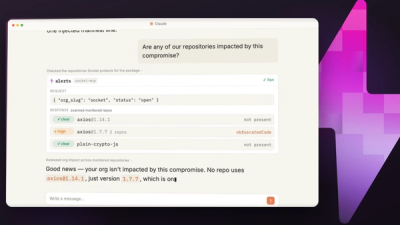
Socket MCP now lets AI assistants review org alerts, investigate threats using the Socket threat feed, and inspect package files in addition to dependency scoring.
Product
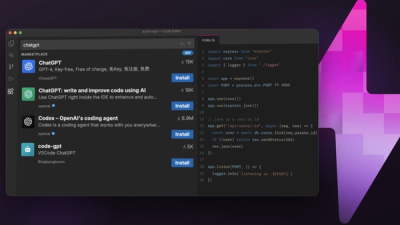
Socket Firewall blocks malicious VS Code and Open VSX extensions before install, protecting developers from compromised editor marketplaces.