

Product
Introducing Repository Access Permissions and Custom Roles
Socket now supports Custom Roles and Repository Access Permissions so organizations can control who can access specific repositories and actions.
By Joe Werle - Jun 19, 2026
predict-data-types
Advanced tools
A lightweight, zero-dependency npm package that predicts data types for comma-separated values, including JSON objects, and validates URLs, phone numbers, email addresses, IP addresses, colors, percentages, and currency within string values.


When users upload CSV or JSON files, everything arrives as strings.
This library infers the actual data types automatically.
const { infer } = require("predict-data-types");
infer("42")
// → 'number'
infer(["true", "false", "true"])
// → 'boolean'
infer({ name: "Alice", age: "25", email: "alice@example.com" })
// → { name: 'string', age: 'number', email: 'email' }
infer([
{ name: "Alice", age: "25" },
{ name: "Bob", age: "30" }
])
// → { name: 'string', age: 'number' }
One smart function. Any input type.
Zero-dependency package for automatic data type detection from strings, arrays, and JSON objects. Detects 14+ data types including primitives, emails, URLs, UUIDs, dates, IPs, colors, percentages, and currency.
infer() function handles strings, arrays, objects, and arrays of objectsDataTypes for type-safe comparisons instead of string literalsnpm install predict-data-types
| Type | Examples |
|---|---|
string | 'John', 'Hello World' |
number | 42, 3.14, -17, 1e10 |
boolean | true, false, yes, no |
email | user@example.com |
phone | 555-555-5555, (555) 555-5555 |
url | https://example.com |
uuid | 550e8400-e29b-41d4-a716-446655440000 |
date | 2023-12-31, 31/12/2023 |
ip | 192.168.1.1, 2001:0db8::1 |
color | #FF0000, #fff |
percentage | 50%, -25% |
currency | $100, €50.99 |
array | [1, 2, 3] |
object | {"name": "John"} |
Use DataTypes constants instead of string literals for type-safe comparisons:
const { infer, DataTypes } = require("predict-data-types");

const type = infer("test@example.com");

// ✅ Type-safe with constants
if (type === DataTypes.EMAIL) {
  console.log("Valid email!");
}

// ❌ Avoid string literals (error-prone)
if (type === 'email') { ... }

// All available constants:
DataTypes.STRING      // 'string'
DataTypes.NUMBER      // 'number'
DataTypes.BOOLEAN     // 'boolean'
DataTypes.EMAIL       // 'email'
DataTypes.PHONE       // 'phone'
DataTypes.URL         // 'url'
DataTypes.UUID        // 'uuid'
DataTypes.DATE        // 'date'
DataTypes.ARRAY       // 'array'
DataTypes.OBJECT      // 'object'
DataTypes.IP          // 'ip'
DataTypes.COLOR       // 'color'
DataTypes.PERCENTAGE  // 'percentage'
DataTypes.CURRENCY    // 'currency'
const predictDataTypes = require("predict-data-types");

const text = "John, 30, true, john@example.com, 2023-01-01";
const types = predictDataTypes(text);

console.log(types);
// {
//   'John': 'string',
//   '30': 'number',
//   'true': 'boolean',
//   'john@example.com': 'email',
//   '2023-01-01': 'date'
// }
infer() FunctionThe infer() function automatically adapts to any input type:
const { infer, DataTypes } = require("predict-data-types");

// Single value → DataType
infer("2024-01-01") // → 'date'
infer("test@example.com") // → 'email'
infer("42") // → 'number'

// Array of values → Common DataType
infer(["1", "2", "3"]) // → 'number'
infer(["true", "false", "yes"]) // → 'boolean'

// Object → Schema
infer({
  name: "Alice",
  age: "25",
  active: "true"
})
// → { name: 'string', age: 'number', active: 'boolean' }

// Array of objects → Schema
infer([
  { name: "Alice", age: "25", email: "alice@example.com" },
  { name: "Bob", age: "30", email: "bob@example.com" }
])
// → { name: 'string', age: 'number', email: 'email' }
Generate standard JSON Schema for validation libraries (Ajv, etc.):
const { infer, Formats } = require("predict-data-types");

const data = {
  name: "Alice",
  age: "25",
  email: "alice@example.com",
  website: "https://example.com"
};

// Simple format (default)
infer(data)
// → { name: 'string', age: 'number', email: 'email', website: 'url' }

// JSON Schema format
infer(data, Formats.JSONSCHEMA)
// → {
//     type: 'object',
//     properties: {
//       name: { type: 'string' },
//       age: { type: 'number' },
//       email: { type: 'string', format: 'email' },
//       website: { type: 'string', format: 'uri' }
//     },
//     required: ['name', 'age', 'email', 'website']
//   }

// Use with validation libraries
const Ajv = require('ajv');
const ajv = new Ajv();

const schema = infer(data, Formats.JSONSCHEMA);
const validate = ajv.compile(schema);
const valid = validate({ name: "Bob", age: 30, email: "bob@example.com", website: "https://bob.dev" });
const csvData = `name,age,active,email
John,30,true,john@example.com`;

const types = predictDataTypes(csvData, true);
// {
//   'name': 'string',
//   'age': 'number',
//   'active': 'boolean',
//   'email': 'email'
// }
Form Validation
const { infer, DataTypes } = require("predict-data-types");

const formData = {
  email: "user@example.com",
  age: "25",
  website: "https://example.com"
};

const schema = infer(formData);
// { email: 'email', age: 'number', website: 'url' }

// Type-safe validation
if (schema.email !== DataTypes.EMAIL) {
  throw new Error("Invalid email format");
}

const schema = infer(formData);
// Automatically validates field types
API Response Analysis
const apiResponse = [
  { id: "1", created: "2024-01-01", status: "true" },
  { id: "2", created: "2024-01-02", status: "false" }
];

const schema = infer(apiResponse);
// Generate schema for documentation
CSV Import
const csvImport = `id,email,signup_date
1,alice@example.com,2024-01-01
2,bob@example.com,2024-01-02`;

const schema = predictDataTypes(csvImport, true);
// Auto-detect column types for database import
const data = "192.168.1.1, #FF0000, 50%, $100, 2023-12-31";
const types = predictDataTypes(data);
// {
//   '192.168.1.1': 'ip',
//   '#FF0000': 'color',
//   '50%': 'percentage',
//   '$100': 'currency',
//   '2023-12-31': 'date'
// }
predictDataTypes(input, firstRowIsHeader)Parameters:
input (string): Comma-separated string to analyzefirstRowIsHeader (boolean): Treat first row as headers (default: false)Returns: Object mapping field names/values to their data types
Throws: Error if input is null, undefined, or not a string
infer(input)Smart inference for any input type:
Parameters:
input (string | string[] | Object | Object[]): Value(s) to analyzeReturns:
Examples:
infer("42")                    // → 'number'
infer(["1", "2"])              // → 'number'
infer({ age: "25" })           // → { age: 'number' }
infer([{ age: "25" }])         // → { age: 'number' }
npm test              # Run tests
npm run test:coverage # Run tests with coverage
npm run lint          # Check code quality
npm run lint:fix      # Fix lint issues
MIT License - see LICENSE file for details.
See CONTRIBUTING.md for contribution guidelines.
Author: Melih Birim
FAQs
A lightweight, zero-dependency npm package that predicts data types for comma-separated values, including JSON objects, and validates URLs, phone numbers, email addresses, IP addresses, colors, percentages, and currency within string values.
The npm package predict-data-types receives a total of 20 weekly downloads. As such, predict-data-types popularity was classified as not popular.
We found that predict-data-types demonstrated a healthy version release cadence and project activity because the last version was released less than a year ago. It has 1 open source maintainer collaborating on the project.
Did you know?

Socket for GitHub automatically highlights issues in each pull request and monitors the health of all your open source dependencies. Discover the contents of your packages and block harmful activity before you install or update your dependencies.
Product
Socket now supports Custom Roles and Repository Access Permissions so organizations can control who can access specific repositories and actions.
Product
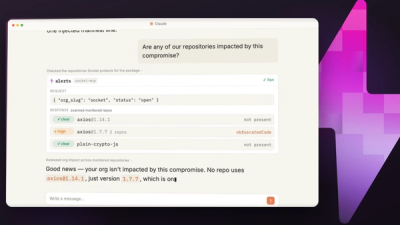
Socket MCP now lets AI assistants review org alerts, investigate threats using the Socket threat feed, and inspect package files in addition to dependency scoring.
Product
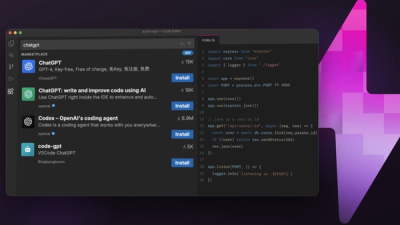
Socket Firewall blocks malicious VS Code and Open VSX extensions before install, protecting developers from compromised editor marketplaces.