

Product
Introducing Reports: An Extensible Reporting Framework for Socket Data
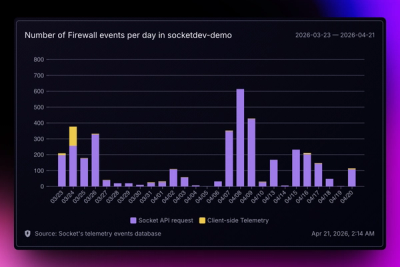
Explore exportable charts for vulnerabilities, dependencies, and usage with Reports, Socket’s new extensible reporting framework.
By André Staltz - Apr 21, 2026
vitest-mock-extended
Advanced tools
Type safe mocking extensions for vitest, forked from jest-mock-extended
Type safe mocking extensions for Vitest ✅


THIS IS A FORK OF jest-mock-extended ALL CREDITS GO TO THE ORIGINAL AUTHOR
npm install vitest-mock-extended --save-dev
or
yarn add vitest-mock-extended --dev
If ReferenceError: vi is not defined related error occurs, please set globals: true.
import { mock } from 'vitest-mock-extended';

interface PartyProvider {
    getPartyType: () => string;
    getSongs: (type: string) => string[];
    start: (type: string) => void;
}

describe('Party Tests', () => {
    test('Mock out an interface', () => {
        const mock = mock<PartyProvider>();
        mock.start('disco party');

        expect(mock.start).toHaveBeenCalledWith('disco party');
    });

    test('mock out a return type', () => {
        const mock = mock<PartyProvider>();
        mock.getPartyType.mockReturnValue('west coast party');

        expect(mock.getPartyType()).toBe('west coast party');
    });

    test('Can specify fallbackMockImplementation', () => {
        const mockObj = mock<MockInt>(
            {},
            {
                fallbackMockImplementation: () => {
                    throw new Error('not mocked');
                },
            }
        );

        expect(() => mockObj.getSomethingWithArgs(1, 2)).toThrowError('not mocked');
    });
});
If you wish to assign a mock to a variable that requires a type in your test, then you should use the MockProxy<> type given that this will provide the apis for calledWith() and other built-in vitest types for providing test functionality.
import { MockProxy, mock } from 'vitest-mock-extended';

describe('test', () => {
    let myMock: MockProxy<MyInterface>;

    beforeEach(() => {
        myMock = mock<MyInterface>();
    })

    test(() => {
         myMock.calledWith(1).mockReturnValue(2);
         ...
    })
});
vitest-mock-extended allows for invocation matching expectations. Types of arguments, even when using matchers are type checked.
const provider = mock<PartyProvider>();
provider.getSongs.calledWith('disco party').mockReturnValue(['Dance the night away', 'Stayin Alive']);
expect(provider.getSongs('disco party')).toEqual(['Dance the night away', 'Stayin Alive']);

// Matchers
provider.getSongs.calledWith(any()).mockReturnValue(['Saw her standing there']);
provider.getSongs.calledWith(anyString()).mockReturnValue(['Saw her standing there']);
You can also use mockFn() to create a vi.fn() with the calledWith extension:
type MyFn = (x: number, y: number) => Promise<string>;
const fn = mockFn<MyFn>();
fn.calledWith(1, 2).mockReturnValue('str');
vitest-mock-extended exposes a mockClear and mockReset for resetting or clearing mocks with the same
functionality as vi.fn().
import { mock, mockClear, mockReset } from 'vitest-mock-extended';

describe('test', () => {
   const mock: UserService = mock<UserService>();

   beforeEach(() => {
      mockReset(mock); // or mockClear(mock)
   });
   ...
})
If your class has objects returns from methods that you would also like to mock, you can use mockDeep in
replacement for mock.
import { mockDeep } from 'vitest-mock-extended';

const mockObj: DeepMockProxy<Test1> = mockDeep<Test1>();
mockObj.deepProp.getNumber.calledWith(1).mockReturnValue(4);
expect(mockObj.deepProp.getNumber(1)).toBe(4);
if you also need support for properties on functions, you can pass in an option to enable this
import { mockDeep } from 'vitest-mock-extended';
const mockObj: DeepMockProxy<Test1> = mockDeep<Test1>({ funcPropSupport: true });
mockObj.deepProp.calledWith(1).mockReturnValue(3);
mockObj.deepProp.getNumber.calledWith(1).mockReturnValue(4);
expect(mockObj.deepProp(1)).toBe(3);
expect(mockObj.deepProp.getNumber(1)).toBe(4);
You can also provide a fallback mock implementation to be used if you do not define a return value using calledWith.
import { mockDeep } from 'jest-mock-extended';
const mockObj = mockDeep<Test1>({
    fallbackMockImplementation: () => {
        throw new Error('please add expected return value using calledWith');
    },
});
expect(() => mockObj.getNumber()).toThrowError('not mocked');
If you mock objects/functions of modules and can't refer them directly due to hoist,
mocked type helpers can be used. This is similar to the use case of Vitest's vi.mocked
// APIs
import { mocked, mockedFn } from "vitest-mock-extended";
import { originalObj, originalFn} from "somewhere";

const mockedObj = mocked(originalObj);
const deepMockedObj = mocked(originalObj, true);
const mockedFunction = mockedFn(originalFn);
An example would be
// Mock a module
// @/libs/example.mock.ts
import { mock } from "vitest-mock-extended";
import { ExampleClient } from "@/libs/example";

vi.mock(import("@/libs/example"), async (importOriginal) => {
  const actual = await importOriginal();
  return {
    ...actual,
    // Due to vi.mock being hoisted, we have to mock here directly instead of
    // defining an exampleMock outside and assign it to example
    example: mock<ExampleClient>(),
  };
});

// Use the mocked object
import "@/libs/example.mock"; // Mock out the actual client
import { mocked } from "vitest-mock-extended";
import { example } from "@/libs/example";

const exampleMock = mocked(example);

test("send notification", () => {
    example.function.mockResolvedValue(xxx);
    ...
}
| Matcher | Description |
|---|---|
| any() | Matches any arg of any type. |
| anyBoolean() | Matches any boolean (true or false) |
| anyString() | Matches any string including empty string |
| anyNumber() | Matches any number that is not NaN |
| anyFunction() | Matches any function |
| anyObject() | Matches any object (typeof m === 'object') and is not null |
| anyArray() | Matches any array |
| anyMap() | Matches any Map |
| anySet() | Matches any Set |
| isA(class) | e.g isA(DiscoPartyProvider) |
| includes('value') | Checks if value is in the argument array |
| containsKey('key') | Checks if the key exists in the object |
| containsValue('value') | Checks if the value exists in an object |
| has('value') | checks if the value exists in a Set |
| notNull() | value !== null |
| notUndefined() | value !== undefined |
| notEmpty() | value !== undefined && value !== null && value !== '' |
| captor() | Used to capture an arg - alternative to mock.calls[0][0] |
Custom matchers can be written using a MatcherCreator
import { MatcherCreator, Matcher } from 'vitest-mock-extended';

// expectedValue is optional
export const myMatcher: MatcherCreator<MyType> = (expectedValue) =>
    new Matcher((actualValue) => {
        return expectedValue === actualValue && actualValue.isSpecial;
    });
By default, the expected value and actual value are the same type. In the case where you need to type the expected value differently than the actual value, you can use the optional 2 generic parameter:
import { MatcherCreator, Matcher } from 'vitest-mock-extended';

// expectedValue is optional
export const myMatcher: MatcherCreator<string[], string> = (expectedValue) =>
    new Matcher((actualValue) => {
        return actualValue.includes(expectedValue);
    });
Sinon is a popular standalone test spies, stubs, and mocks library for JavaScript. It provides similar functionalities to vitest-mock-extended but is framework-agnostic, meaning it can be used with any testing framework, not just Vitest.
Jest Mock is a part of the Jest testing framework that provides utilities for creating mocks, spies, and stubs. It offers similar functionalities to vitest-mock-extended but is specifically designed to work with Jest.
Testdouble is a library for creating test doubles (mocks, stubs, and spies) in JavaScript. It provides a flexible API for defining and verifying interactions, similar to vitest-mock-extended, but can be used with various testing frameworks.
FAQs
Type safe mocking extensions for vitest, forked from jest-mock-extended
The npm package vitest-mock-extended receives a total of 538,983 weekly downloads. As such, vitest-mock-extended popularity was classified as popular.
We found that vitest-mock-extended demonstrated a healthy version release cadence and project activity because the last version was released less than a year ago. It has 1 open source maintainer collaborating on the project.
Did you know?

Socket for GitHub automatically highlights issues in each pull request and monitors the health of all your open source dependencies. Discover the contents of your packages and block harmful activity before you install or update your dependencies.
Product
Explore exportable charts for vulnerabilities, dependencies, and usage with Reports, Socket’s new extensible reporting framework.
Product
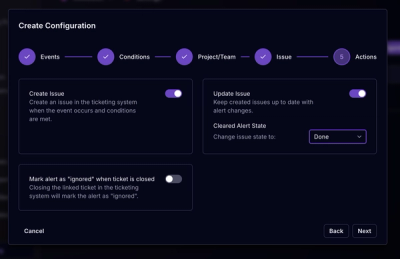
Socket for Jira lets teams turn alerts into Jira tickets with manual creation, automated ticketing rules, and two-way sync.
Company News
Socket won two 2026 Reppy Awards from RepVue, ranking in the top 5% of all sales orgs. AE Alexandra Lister shares what it's like to grow a sales career here.