

Product
Introducing Reachability for PHP
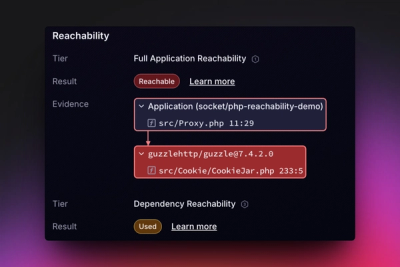
Reachability analysis for PHP is now available in experimental, helping teams identify which vulnerabilities are actually exploitable.
By Benjamin Barslev - Apr 24, 2026
github.com/doug-martin/goqu/v9
Advanced tools
__ _ ___ __ _ _ _
/ _` |/ _ \ / _` | | | |
| (_| | (_) | (_| | |_| |
\__, |\___/ \__, |\__,_|
|___/ |_|




goqu is an expressive SQL builder and executor
If you are upgrading from an older version please read the Migrating Between Versions docs.
If using go modules.
go get -u github.com/doug-martin/goqu/v9
If you are not using go modules...
NOTE You should still be able to use this package if you are using go version >v1.10 but, you will need to drop the version from the package. import "github.com/doug-martin/goqu/v9 -> import "github.com/doug-martin/goqu"
go get -u github.com/doug-martin/goqu
goqu comes with many features but here are a few of the more notable ones
SELECT * FROM "items" WHERE "id" = ? -> SELECT * FROM "items" WHERE "id" = 1)While goqu may support the scanning of rows into structs it is not intended to be used as an ORM if you are looking for common ORM features like associations, or hooks I would recommend looking at some of the great ORM libraries such as:
We tried a few other sql builders but each was a thin wrapper around sql fragments that we found error prone. goqu was built with the following goals in mind:
mysql, postgres, sqlite3, sqlserver etc)goqu expressions and common examples.goqu.goquSee the select dataset docs for more in depth examples
sql, _, _ := goqu.From("test").ToSQL()
fmt.Println(sql)
Output:
SELECT * FROM "test"
sql, _, _ := goqu.From("test").Where(goqu.Ex{
	"d": []string{"a", "b", "c"},
}).ToSQL()
fmt.Println(sql)
Output:
SELECT * FROM "test" WHERE ("d" IN ('a', 'b', 'c'))
See the insert dataset docs for more in depth examples
ds := goqu.Insert("user").
	Cols("first_name", "last_name").
	Vals(
		goqu.Vals{"Greg", "Farley"},
		goqu.Vals{"Jimmy", "Stewart"},
		goqu.Vals{"Jeff", "Jeffers"},
	)
insertSQL, args, _ := ds.ToSQL()
fmt.Println(insertSQL, args)
Output:
INSERT INTO "user" ("first_name", "last_name") VALUES ('Greg', 'Farley'), ('Jimmy', 'Stewart'), ('Jeff', 'Jeffers') []
ds := goqu.Insert("user").Rows(
	goqu.Record{"first_name": "Greg", "last_name": "Farley"},
	goqu.Record{"first_name": "Jimmy", "last_name": "Stewart"},
	goqu.Record{"first_name": "Jeff", "last_name": "Jeffers"},
)
insertSQL, args, _ := ds.ToSQL()
fmt.Println(insertSQL, args)
Output:
INSERT INTO "user" ("first_name", "last_name") VALUES ('Greg', 'Farley'), ('Jimmy', 'Stewart'), ('Jeff', 'Jeffers') []
type User struct {
	FirstName string `db:"first_name"`
	LastName  string `db:"last_name"`
}
ds := goqu.Insert("user").Rows(
	User{FirstName: "Greg", LastName: "Farley"},
	User{FirstName: "Jimmy", LastName: "Stewart"},
	User{FirstName: "Jeff", LastName: "Jeffers"},
)
insertSQL, args, _ := ds.ToSQL()
fmt.Println(insertSQL, args)
Output:
INSERT INTO "user" ("first_name", "last_name") VALUES ('Greg', 'Farley'), ('Jimmy', 'Stewart'), ('Jeff', 'Jeffers') []
ds := goqu.Insert("user").Prepared(true).
	FromQuery(goqu.From("other_table"))
insertSQL, args, _ := ds.ToSQL()
fmt.Println(insertSQL, args)
Output:
INSERT INTO "user" SELECT * FROM "other_table" []
ds := goqu.Insert("user").Prepared(true).
	Cols("first_name", "last_name").
	FromQuery(goqu.From("other_table").Select("fn", "ln"))
insertSQL, args, _ := ds.ToSQL()
fmt.Println(insertSQL, args)
Output:
INSERT INTO "user" ("first_name", "last_name") SELECT "fn", "ln" FROM "other_table" []
See the update dataset docs for more in depth examples
sql, args, _ := goqu.Update("items").Set(
	goqu.Record{"name": "Test", "address": "111 Test Addr"},
).ToSQL()
fmt.Println(sql, args)
Output:
UPDATE "items" SET "address"='111 Test Addr',"name"='Test' []
type item struct {
	Address string `db:"address"`
	Name    string `db:"name" goqu:"skipupdate"`
}
sql, args, _ := goqu.Update("items").Set(
	item{Name: "Test", Address: "111 Test Addr"},
).ToSQL()
fmt.Println(sql, args)
Output:
UPDATE "items" SET "address"='111 Test Addr' []
sql, _, _ := goqu.Update("test").
	Set(goqu.Record{"foo": "bar"}).
	Where(goqu.Ex{
		"a": goqu.Op{"gt": 10}
	}).ToSQL()
fmt.Println(sql)
Output:
UPDATE "test" SET "foo"='bar' WHERE ("a" > 10)
See the delete dataset docs for more in depth examples
ds := goqu.Delete("items")

sql, args, _ := ds.ToSQL()
fmt.Println(sql, args)
sql, _, _ := goqu.Delete("test").Where(goqu.Ex{
		"c": nil
	}).ToSQL()
fmt.Println(sql)
Output:
DELETE FROM "test" WHERE ("c" IS NULL)
I am always welcoming contributions of any type. Please open an issue or create a PR if you find an issue with any of the following.
If you have an issue with the package please include the following
Without those basics it can be difficult to reproduce your issue locally. You may be asked for more information but that is a good starting point.
New features and/or enhancements are great and I encourage you to either submit a PR or create an issue. In both cases include the following as the need/requirement may not be readily apparent.
If you are issuing a PR also include the following
If you find an issue you want to work on please comment on it letting other people know you are looking at it and I will assign the issue to you.
If want to work on an issue but dont know where to start just leave a comment and I'll be more than happy to point you in the right direction.
The test suite requires a postgres, mysql and sqlserver databases. You can override the connection strings with the MYSQL_URI, PG_URI, SQLSERVER_URI environment variables*
go test -v -race ./...
You can also run the tests in a container using docker-compose.
MYSQL_VERSION=8 POSTGRES_VERSION=13.4 SQLSERVER_VERSION=2017-CU8-ubuntu GO_VERSION=latest docker-compose run goqu
goqu is released under the MIT License.
FAQs
Unknown package
Did you know?

Socket for GitHub automatically highlights issues in each pull request and monitors the health of all your open source dependencies. Discover the contents of your packages and block harmful activity before you install or update your dependencies.
Product
Reachability analysis for PHP is now available in experimental, helping teams identify which vulnerabilities are actually exploitable.
Product
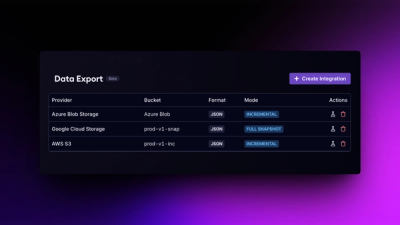
Export Socket alert data to your own cloud storage in JSON, CSV, or Parquet, with flexible snapshot or incremental delivery.
Research
/Security News
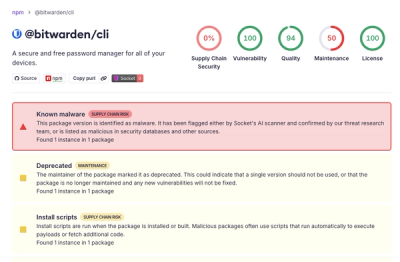
Bitwarden CLI 2026.4.0 was compromised in the Checkmarx supply chain campaign after attackers abused a GitHub Action in Bitwarden’s CI/CD pipeline.